
A ‘Sakura moment’ in the Philippines? — Travelers flock to Malungon to witness blooming pink trees
Robel A. Almoguerra • Ipinost noong 2026-03-08 22:23:07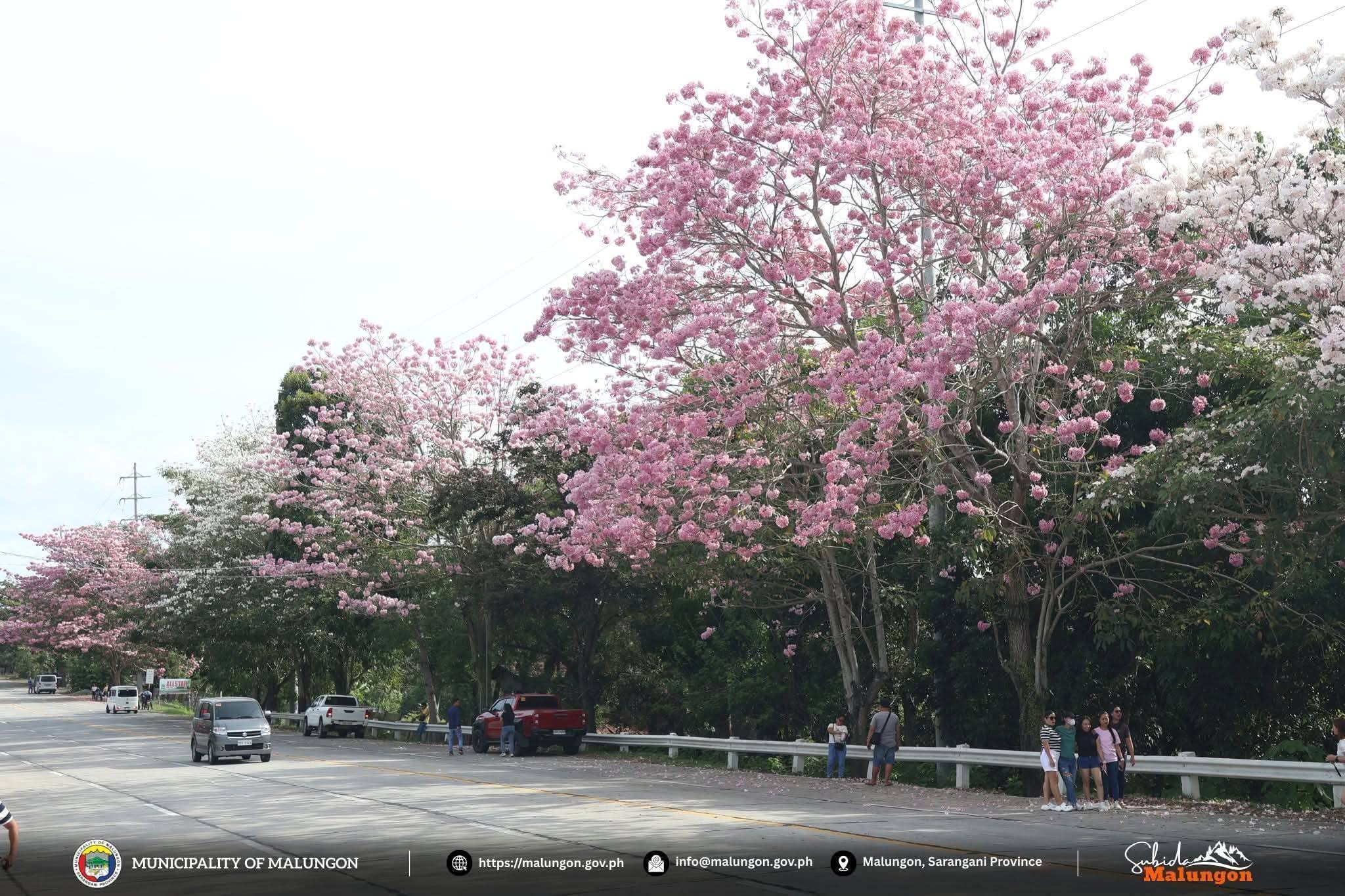
MALUNGON, Sarangani — A stretch of highway in southern Philippines has recently captured the attention of travelers and motorists after rows of pink and white flowering trees created a scene reminiscent of Japan’s famous cherry blossom season.
Located in Sitio Pulatana, Barangay Malandag in the municipality of Malungon, Sarangani, the roadside has become a temporary attraction as trees burst into bloom along both sides of the national highway. The flowers—soft shades of pink and white—have led many visitors to describe the experience as a “sakura moment” in the Philippines.
However, the trees are not actually cherry blossoms. The species has been identified as Tabebuia rosea, commonly known as the pink trumpet tree. While native to Central and South America, the tree has been planted in various parts of the Philippines for landscaping and urban beautification. During its flowering season, the tree briefly sheds its leaves and produces clusters of vibrant blossoms that can resemble the iconic blooms associated with Japan.
Because the flowering period lasts only a short time, the roadside display has quickly drawn curious visitors, photographers, and travelers who stop along the highway to capture the scenery before the blooms fade. For many, the experience offers a rare chance to witness a landscape that evokes the aesthetic beauty often associated with cherry blossom festivals abroad.
Yet the growing attention around this natural spectacle also highlights a broader phenomenon: how fleeting moments in nature can transform ordinary places into destinations overnight. A quiet roadside suddenly becomes a gathering spot, reminding people that beauty does not always require elaborate tourist infrastructure—sometimes it appears unexpectedly along a highway.
At the same time, increased foot traffic and vehicles stopping along busy roads raise questions about safety and environmental protection. While visitors are eager to enjoy the view, maintaining order and preserving the trees will be important to ensure the site remains safe for both travelers and locals.
Moments like this also reflect how Filipinos are learning to appreciate unique natural scenes within their own communities rather than always looking abroad for such experiences.
When ordinary landscapes suddenly become viral tourist spots because of nature’s brief beauty, how can communities balance appreciation, safety, and preservation?
(Larawan mula: Municipality of Malungon / Facebook)