
Agri-Agra Team forms task force to address impact of middle east crisis on food security - Kiko
Cesar Patrick F. Bonales • Ipinost noong 2026-04-01 13:36:35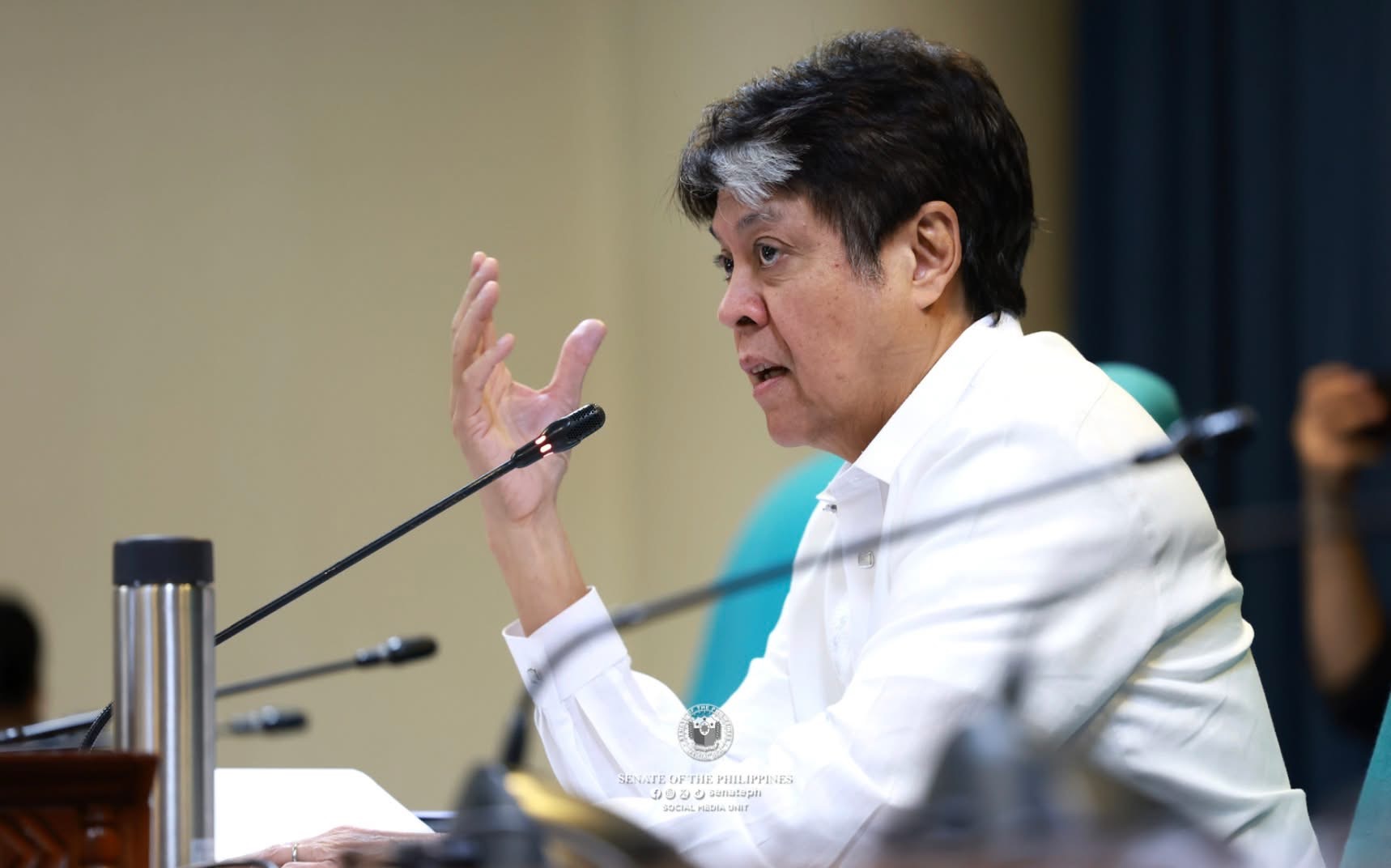
Senator Francis “Kiko” Pangilinan announced that the AGRI-AGRA Team has organized a dedicated task force to closely monitor and respond to the ongoing crisis in the Middle East, with a focus on mitigating its impact on the nation’s food security, agriculture sector, and overall economy.
The AGRI-AGRA Team is composed of the Department of Agriculture (DA), the Department of Agrarian Reform (DAR), representatives from the Senate and Congress, and local government units (LGUs), to address challenges in the agriculture and fisheries sectors and their impact on consumers.
As chairman of the Senate Committee on Agriculture, Food, and Agrarian Reform, Pangilinan has actively collaborated with the AGRI-AGRA Team for his policy and legislative agenda, a series of long-term and sustainable measures that aims to cushion the impact of global crises on the country’s food ecosystem—from the agricultural workers down to household consumers.
“Nagpulong ang Department of Agriculture, Department of Agrarian Reform, mga kongresista, at ang Senado sa agriculture, fisheries, at agrarian reform para magkaroon ng task force na pagtutulungan natin i-monitor, bumuo ng isang ad hoc committee, crisis committee, and AGRI-AGRA Team para bantayan itong magiging tulong, suporta, ayuda, assistance, sa ating food security concerns,” Pangilinan said after his meeting with the AGRI-AGRA Team on Tuesday, March 31.
The lawmaker also divulged that there is a current proposal for a “bayanihan-type” supplemental budget to address the looming energy and food crisis because of the Middle East conflict.
A “bayanihan-type” budget refers to a special, accelerated financial appropriations patterned after the Bayanihan to Heal as One Act and the Bayanihan to Recover as One Act, both passed during the Covid-19 pandemic, to provide rapid and flexible funding to address the crisis.
Included in the proposed supplemental budget are provisions on additional interventions to ease the burden of the current crisis on Filipinos.
Pangilinan explained that fuel costs account for 80% of fisheries production, while prices of fertilizers and feeds have also significantly increased because of the massive jump in the prices of petroleum products.
“Lahat yan ibig sabihin ay may direktang epekto sa pagtaas ng presyo ng pagkain. So, paano masususportahan ang ating food producers? Paano masusuportahan yung magsasaka, mangingisda, jeepney drayber, at iba pang sektor na apektado dahil nga dito?,” he asked. “Sa pamamagitan ng dagdag na budget ay magagawa natin yan.”
He also warned that those who abuse the current crisis by selling overpriced products can be duly charged with profiteering, stressing that the DA and the Department of Trade and Industry (DTI) are currently monitoring prices in local markets.
During the meeting, the team discussed the status of the country’s top commodities—sugar, onion, pork, chicken, egg, fisheries, and rice—as well as concerns about the use of biofertilizers, debt moratoriums, biofuels, price monitoring and accessibility, and warehouse congestion.
Among the meeting’s attendees were DA Secretary Kiko Tiu-Laurel, DAR Secretary Conrad Estrella, House Committee on Agrarian Reform chairman Rep. Leah Bulut-Begtang, House Committee on Agriculture chairman Rep. Mark Enverga, and House Committee on Food Security chairman Rep. Adrian Salceda.
Aside from his work with the AGRI-AGRA Team, Pangilinan previously urged the government to expand fuel subsidies for farmers and fishers, noting that higher fuel prices directly reduce their already thin margins.
He also pushed for the suspension of fuel excise taxes amid the Middle East conflict, while also working to pass legislative measures such as the renationalization of agricultural extension services, the strengthening of agriculture cooperatives, and the creation of the Congressional Commission on Agriculture, Fisheries, and Food Security (AGRICOM).