
Remulla vows to end alleged organized crime in BFP — Can internal cleansing restore public trust?
Robel A. Almoguerra • Ipinost noong 2026-04-06 23:37:50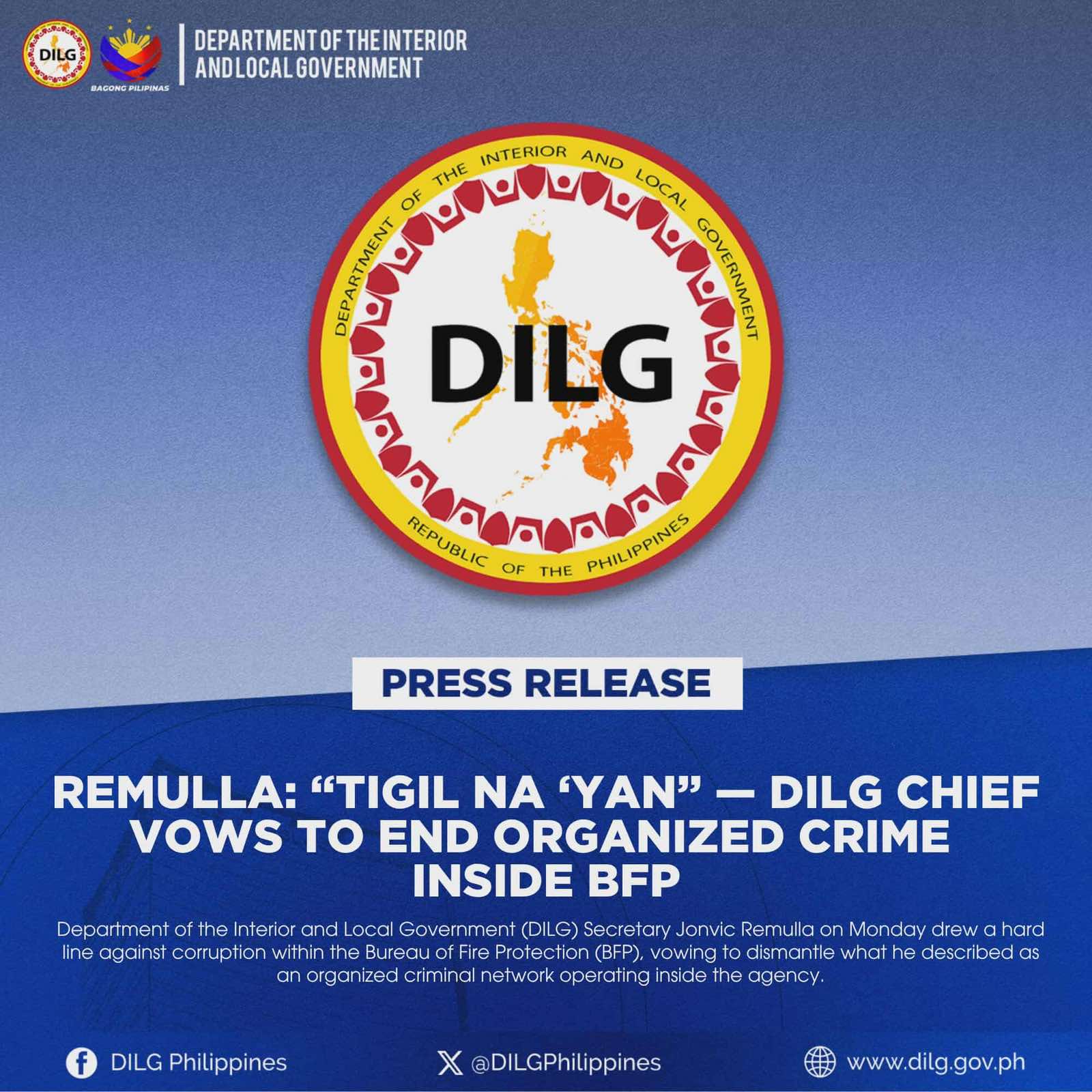
MANILA, Philippines — Jonvic Remulla has drawn a firm line against corruption within the Bureau of Fire Protection, declaring a full-scale effort to dismantle what he described as an organized criminal network operating inside the agency.
Speaking during a press conference at the BFP national headquarters, the Department of the Interior and Local Government chief issued a strong warning: “I’m going to put an end to this! Tigil na ‘yan!” His statement underscores growing frustration over what he claims is a deeply rooted system of corruption spanning multiple levels—from recruitment to inspections, operations, and procurement.
Remulla revealed that the issue is not isolated but systemic, alleging coordinated wrongdoing within the ranks. His remarks come after the suspension of several safety fire inspectors in Metro Manila and the filing of graft and corruption charges against former BFP Chief Jesus Fernandez. Despite ongoing reforms, including the deployment of 902 body-worn cameras, complaints continue to surface, with at least ten new reports filed even after leadership changes.
The DILG chief emphasized that the campaign is not meant to generalize the entire organization, acknowledging that there are still honest personnel within the bureau. Some relieved officers may be reinstated, while provincial inspectors are expected to be deployed to Metro Manila to stabilize operations.
He also admitted that intensified internal cleansing has affected procurement processes, particularly in acquiring fire equipment. However, Remulla assured the public that deliveries of fire trucks are expected within the year, stressing that these temporary setbacks are necessary to address deeper issues.
Beyond the crackdown, the situation raises broader concerns about institutional integrity and accountability within public safety agencies. Efforts to root out corruption often come with operational disruptions, but they also present an opportunity to rebuild trust and strengthen systems.
As the government pushes forward with reforms, one question remains: Can aggressive internal cleansing truly eliminate systemic corruption, or will deeper structural changes be needed to ensure lasting accountability?
(Larawan mula: DILG / Facebook)