
PhilHealth rolls out QR codes for YAKAP services in CALABARZON — Digital convenience or a gap in accessibility?
Robel A. Almoguerra • Ipinost noong 2026-04-13 22:33:50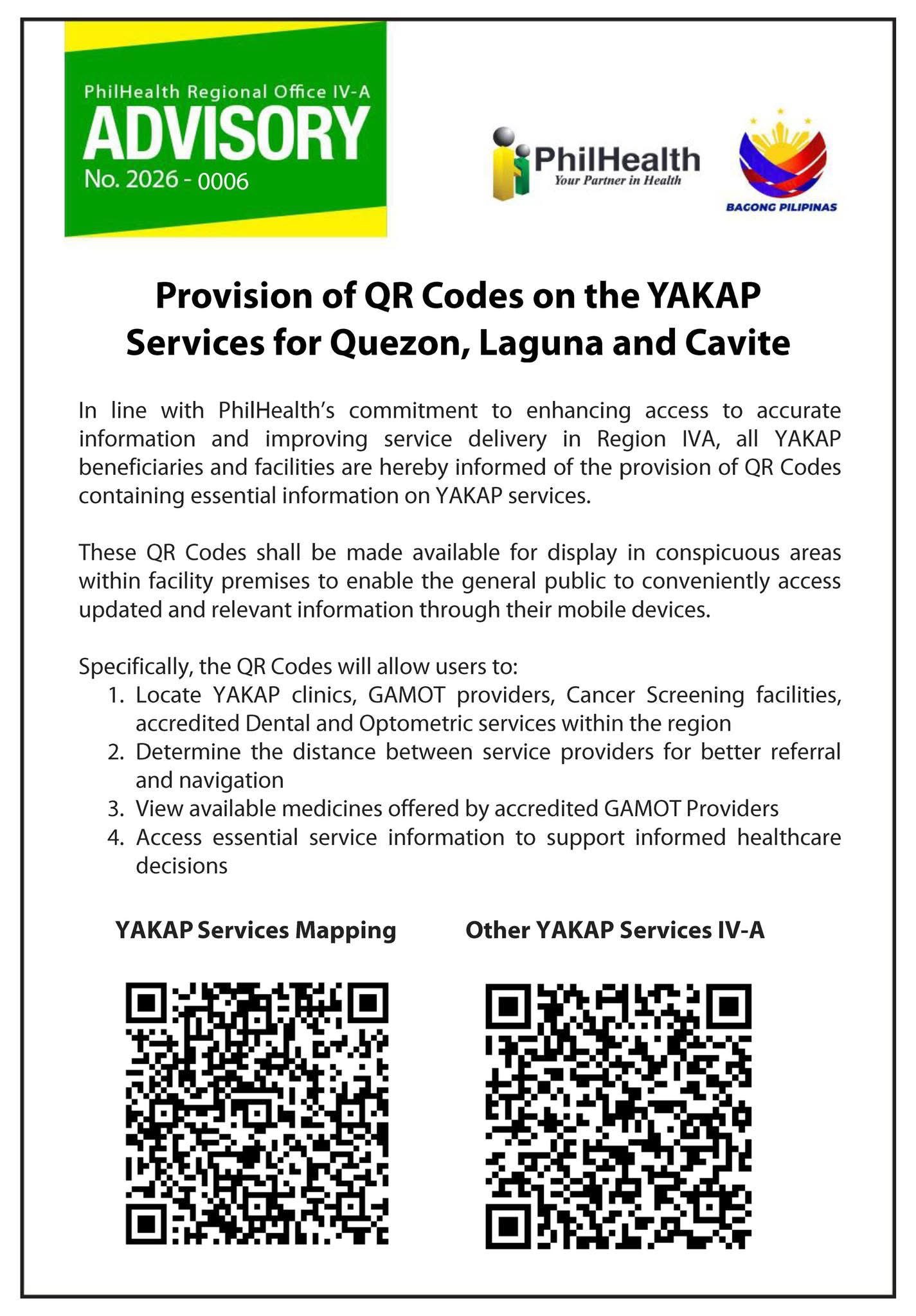
APRIL 13, 2026 — In a move toward digital transformation in public healthcare, Philippine Health Insurance Corporation has launched QR codes to streamline access to its YAKAP (Yaman ng Kalusugan Program) services across Quezon, Laguna, and Cavite. The initiative, outlined in Advisory No. 2026-0006 issued on April 10, 2026, aims to make vital health information more accessible through mobile technology.
Under this system, QR codes will be prominently displayed in healthcare facilities, allowing patients and stakeholders to instantly access essential data using their smartphones. By simply scanning the codes, users can locate YAKAP clinics, identify accredited GAMOT providers, find cancer screening centers, and view available dental and optometric services within the region.
Beyond basic information, the platform also enhances navigation and referral efficiency by showing the distance between patients and service providers. It even offers real-time access to lists of available medicines from accredited GAMOT providers—empowering individuals to make informed healthcare decisions more quickly and efficiently.
Separate QR codes have also been designated for specific services, including YAKAP service mapping and province-based medicine availability, ensuring that users receive localized and relevant information. According to PhilHealth, this initiative is part of a broader push to improve transparency, accessibility, and service delivery for members and healthcare partners.
While the innovation signals progress, it also raises important considerations. Not all Filipinos—especially in remote or underserved communities—have reliable access to smartphones or internet connectivity. As healthcare systems become more digitized, the challenge lies in ensuring that no one is left behind in the process.
Ultimately, this initiative reflects a growing trend: the integration of technology into essential public services. But as systems evolve, inclusivity must remain at the forefront.