
FL Liza Marcos fights back as scammers hijack her name — who’s really behind the digital con?
Marijo Farah A. Benitez • Ipinost noong 2026-04-21 10:20:52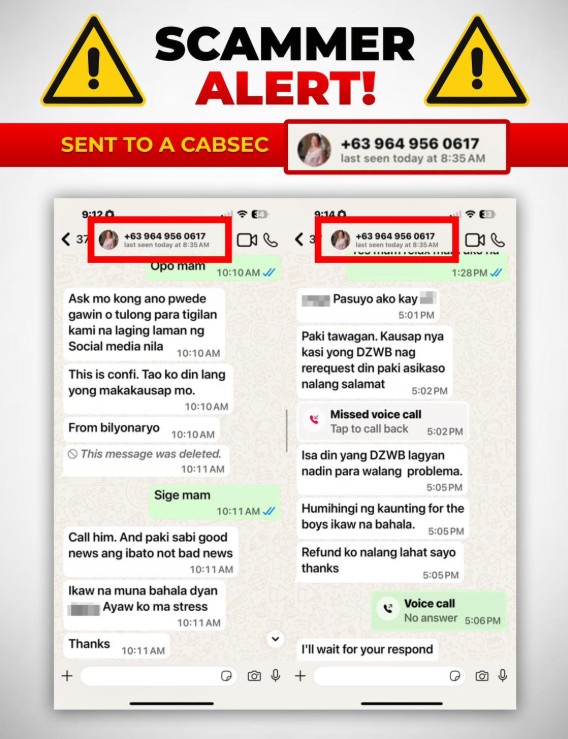
APRIL 21, 2026 — First Lady Liza Marcos has sounded the alarm against scammers impersonating her through text and messaging apps, warning Pinoys not to send money or share personal information. The scheme has already reached senators, Cabinet officials, and friends, raising serious concerns about cybercrime and trust in digital communication.
On April 20, 2026, First Lady Louise “Liza” Araneta-Marcos publicly warned that fraudsters were using her name and profile photo to solicit money via text and WhatsApp. She revealed that even high-ranking officials had received suspicious messages.
“I’ve received several messages from friends seeking to verify text exchanges allegedly coming from me,” she posted. “To be clear: These messages are not from me. There are individuals impersonating others and attempting to solicit money through deception.”
Malacañang confirmed the scam, with Palace press officer Claire Castro noting that impostors were even attempting to give directives to government officials using the First Lady’s identity.
This incident is more than just a personal inconvenience — it highlights how vulnerable we really are to digital fraud. If scammers can target senators and Cabinet members, what more ordinary citizens who may not have the resources to verify such messages? The First Lady’s warning underscores the growing need for vigilance in a country where mobile messaging is deeply woven into daily life.
Cybercrime in the Philippines has surged in recent years, with scams ranging from fake job offers to phishing attacks. The fact that scammers are now bold enough to impersonate the First Lady shows how trust and authority can be weaponized.
Call to action
Marcos urged the public not to engage with suspicious messages, not to share personal data, and to report cases to the NBI Cybercrime Division.
“Let’s not give space to those who exploit trust and spread fake news! Thank you for your vigilance and continued support,” she said.
But how prepared are we, as a nation, to defend ourselves against digital deception? The First Lady’s warning is a reminder that cybercrime is not just a technical issue — it’s a social one. It exploits trust, relationships, and authority. We must demand stronger safeguards, better public awareness campaigns, and accountability from both government and telecom providers.
If scammers can impersonate the First Lady and reach the highest levels of government, how safe are we from being deceived next?
(Image: Liza Marcos | Facebook)