
Why Bethlehem’s Christmas comeback feels hopeful and fragile at the same time
Margret Dianne Fermin • Ipinost noong 2025-12-25 08:39:21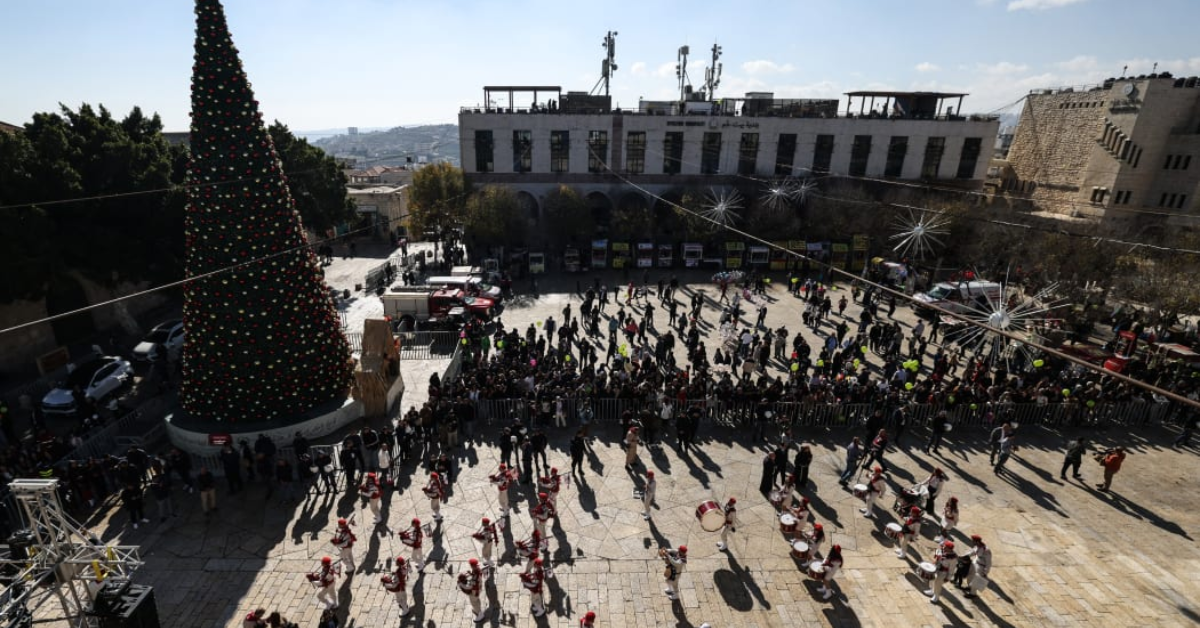
BETHLEHEM, West Bank — For the first time in more than two years, Bethlehem marked a festive Christmas celebration, emerging from the shadow of the Gaza war that had muted holiday observances since 2023.
On Wednesday, scout parades marched under clear skies in Manger Square as music filled the streets and decorations returned to the biblical birthplace of Jesus Christ. Previous Christmas celebrations had been canceled or scaled down following the outbreak of the Israel-Hamas conflict in October 2023, which cast a somber mood across the region.
Families, pilgrims, and tourists gathered outside the Church of the Nativity, where Pierbattista Pizzaballa, the Latin Patriarch of Jerusalem, led the traditional procession from Jerusalem to Bethlehem. “After two years of darkness, we need light,” Pizzaballa said, calling for peace and renewal in the Holy Land.
The city’s giant Christmas tree, absent during the war years, was lit once again as scout groups played carols on bagpipes. Local officials said the return of festivities provided a much-needed boost to morale and tourism, a vital lifeline for Bethlehem during the holiday season.
The celebrations came amid a fragile truce in Gaza, where displaced families continue to face hardship. At the Vatican, Pope Leo XIV renewed his call for “24 hours of peace in the whole world” during Christmas.
Celebration Returns, but Peace Remains Fragile
Bethlehem’s joyful Christmas celebration feels deeply symbolic, not because the conflict has ended, but because joy returned despite it. After years of silence, music and light filled Manger Square again, reminding the world that resilience often appears before resolution.
This celebration should not be mistaken for closure. Just kilometers away, displaced families in Gaza continue to endure winter in tents, and the region remains tense despite a fragile truce. Bethlehem’s renewed festivities highlight a painful contrast between hope and hardship, celebration and survival.
Yet that contrast is precisely why the moment matters. Christmas in Bethlehem carries global meaning. It speaks to faith traditions that place peace, humility, and compassion at their center. To celebrate amid uncertainty is not denial. It is defiance against despair.
Still, symbolism has limits. Lighted trees and parades cannot substitute for political solutions or humanitarian relief. The danger lies in allowing images of celebration to soften the urgency of suffering that continues beyond the square.
Bethlehem’s Christmas should be read as an appeal, not a conclusion. It calls on leaders, communities, and nations to protect fragile pauses in violence and transform them into lasting peace. Hope has returned to the streets, but peace remains unfinished business,
Image from RNZ