
On Hypersonic Missiles: Are You Afraid of North Korea? That Reaction May Be Exactly the Point
Margret Dianne Fermin • Ipinost noong 2026-01-05 09:14:46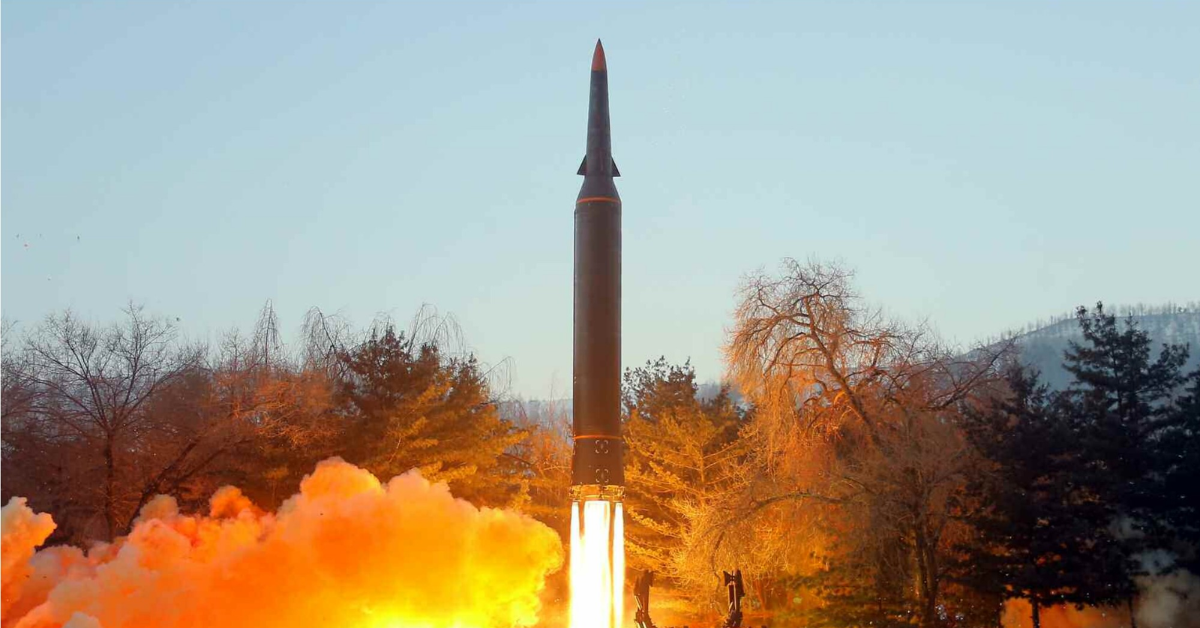
January 6, 2026 - North Korea confirmed it test-fired hypersonic missiles on January 4, 2026, marking its first weapons launch of the year and immediately reviving familiar anxieties across the region. According to state media, the launch was personally overseen by Kim Jong Un, who linked the test to what he called “the recent geopolitical crisis” and the need to strengthen nuclear deterrence.
State-run Korean Central News Agency (KCNA) reported that the missiles struck targets roughly 1,000 kilometers away over the East Sea, demonstrating what Pyongyang described as the operational readiness of its hypersonic weapons system. The test was conducted by a sub-unit of the Korean People’s Army to evaluate war deterrence and mission capability.
South Korea’s military confirmed detecting the launch early Sunday morning, noting that ballistic missiles were fired toward waters east of the peninsula. The timing raised eyebrows. The test coincided with South Korean President Lee Jae Myung’s overseas state visit, a reminder that missile launches are rarely scheduled at random.
This was North Korea’s second hypersonic missile test, following an earlier trial in October 2025. Security analysts warn that hypersonic missiles, which travel faster than Mach 5 and can maneuver mid-flight, are harder to track and intercept, compressing response times and complicating existing missile defense systems.
And this is where fear enters the conversation.
Hypersonic weapons sound frightening because they are designed to be. Speed, maneuverability, and unpredictability are not just military advantages. They are psychological ones. They signal advancement. They signal urgency. They force attention in a world crowded with crises.
But the real question is not whether North Korea’s missiles should alarm the public. It is why these tests still work as emotional triggers after years of similar headlines.
Missile launches today function as communication as much as capability. In a global environment where conflicts compete for relevance, fear becomes a form of messaging. By invoking hypersonic technology and tying it to “international circumstances,” Pyongyang reasserts its place in strategic calculations. Ignore us at your own risk.
International condemnation followed swiftly, with observers noting that the test violates United Nations Security Council resolutions banning ballistic missile activity. Yet such responses have become predictable. What remains effective is the unease these launches generate, especially among audiences who may not track policy but feel the tension instinctively.
That tension is the signal.
North Korea’s hypersonic missile test does not mean war is imminent. But it does mean Pyongyang is reminding the world that it can still unsettle, disrupt, and command attention with a single launch.
Fear, in this context, is not a byproduct. It is part of the design.
The danger lies not only in the weapons themselves, but in how familiar these moments have become. Each test raises the threshold of what feels alarming. Each headline asks the same question again. Are you scared yet?
If the answer is yes, the message has already landed.