
Trump warns of second strike on Venezuela — Who’s next in line?
Marijo Farah A. Benitez • Ipinost noong 2026-01-05 14:04:16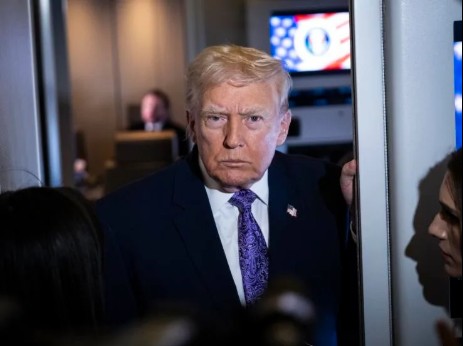
JANUARY 5, 2026 — US President Donald Trump has raised the stakes yet again, announcing that a “second strike” on Venezuela is possible if its government refuses to cooperate with Washington’s demands. The warning, delivered aboard Air Force One, was not just about Venezuela — it carried echoes of broader military ambitions in Latin America, with Trump casually floating “Operation Colombia” and hinting that Mexico and even Cuba could be next.
This is no ordinary statement. It signals a willingness to use repeated military force to bend another sovereign nation into submission.
For us here in the Philippines, this is more than just distant news. It’s a warning, a flashing red light that tells smaller nations: if the world’s superpowers can snatch a sitting president from his own country, blindfold him, and parade him in a foreign court, then sovereignty itself is under siege.
This hits too close to home. While Trump talks of striking Venezuela, we continue to face China’s unrelenting aggression in the West Philippine Sea, where our fishermen are harassed, our reefs are militarized, and our sovereignty is challenged daily.
If superpowers can bend weaker nations through force, then what stops Beijing — already ignoring international rulings — from tightening its grip on our waters even further?
If the world accepts this precedent, then smaller countries like ours could one day face the same fate — targeted, pressured, and possibly invaded under the guise of “fixing” us.
Trump’s words were chilling: “Operation Colombia sounds good to me.” He even hinted that Mexico could face military action if drug flows continued. And as if that weren’t enough, he added that Cuba “looks like it’s ready to fall.”
These are not just offhand remarks. They are signals of a mindset — one that sees military might as the shortcut to solving complex problems.
In Venezuela, the images of Nicolas Maduro, handcuffed and blindfolded, stunned the nation. Defense Minister Vladimir Padrino also accused the US of killing soldiers and civilians “in cold blood.” Cuba confirmed 32 of its citizens died in the raid.
Diosdado Cabello, Maduro’s ally and former Executive Vice President of Venezuela, insisted: “Here, there is only one president, whose name is Nicolas Maduro Moros. Let no one fall for the enemy’s provocations.”
Venezuela today — who will it be tomorrow?
Whether one supports Maduro or not, the principle is clear: the capture of a foreign head of state by another country is a direct violation of international law. It undermines the very foundation of sovereignty.
And here’s where Filipinos should pay attention. If this precedent is normalized, what stops stronger nations from deciding that our leaders, our institutions, or even our resources are theirs to “fix”?
Trump’s blunt admission revealed the deeper motive: US oil companies need “total access” to Venezuela’s reserves.
So Diosdado Cabello, former Executive Vice President of Venezuela, hit back: “We are outraged because in the end, everything was revealed — it was revealed that they only want our oil.”
Strip away the rhetoric, and what remains is resource politics. Oil in Venezuela, drugs in Colombia, migration in Mexico — all framed as threats to US national interest.
But what happens when the “threat” is in Asia? What if it’s the South China Sea, or our own natural gas reserves in Malampaya? China has already shown its willingness to seize territory, build artificial islands, and deploy military vessels in our waters. If the world shrugs at Venezuela’s plight, then what moral ground remains for us to demand respect for our sovereignty?
The Philippines has long relied on international law to defend its territorial claims. We invoke UNCLOS, we appeal to the UN, we call on allies to respect sovereignty. But if a superpower can topple a government and justify it as law enforcement, then our own appeals could be dismissed as noise. Worse, China could point to Venezuela as proof that might makes right, emboldening its continued defiance of the Hague ruling.
The muted streets of Caracas, where citizens stocked up on rice and tuna amid fear, remind us of our own resilience in times of crisis. But resilience is not enough when sovereignty itself is at stake. The Venezuelan opposition, once hopeful, now finds itself sidelined as Trump dismisses democratic alternatives.
That, too, should alarm us: foreign powers deciding who is “fit” to lead another nation.
The UN Security Council is set to meet, with Russia and China condemning the US strike. Yet history tells us that condemnation often fades, while interventions leave scars.
For Filipinos, the lesson is stark: sovereignty is fragile, and once violated, it may never fully recover.
Trump’s Venezuela strike is not just about Latin America. It is about the future of small nations everywhere. It is about whether international law still has teeth, or whether might alone makes right.
And so, as we watch this unfold, we must ask ourselves: If Venezuela can be struck, who’s next?
In a world where power tramples law, the Philippines must never forget that sovereignty is our last line of defense.
(Image: Yahoo)