
The ‘world police’ strikes again! Iran’s protests fuels America’s obsession with control
Marijo Farah A. Benitez • Ipinost noong 2026-01-13 14:11:19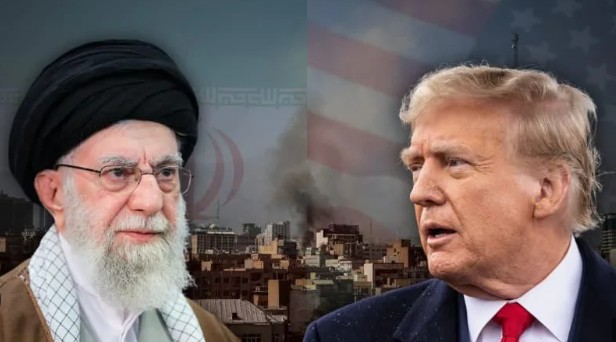
JANUARY 13, 2026 — Iran is burning with anger. The largest protests in years have shaken the Islamic theocracy, with hundreds killed in a brutal crackdown. The regime, weakened by war with Israel and U.S. airstrikes on its nuclear facilities, now faces a crisis of legitimacy. Supreme Leader Ayatollah Ali Khamenei, 86, disappeared from public view for days, fueling speculation about succession. And while reformist President Masoud Pezeshkian holds office, he has little power to deliver the sweeping changes protesters demand.
Globally, Iran stands isolated. Russia is preoccupied with Ukraine, China offers only cautious words of “hope for stability,” and the United Nations has reimposed sanctions that freeze assets and cripple its economy.
The rial has plunged to a record low, food prices have soared, and ordinary Iranians — traders, shopkeepers, students — have taken to the streets. Their anger is raw, their courage undeniable.
But while Iranians fight for their future, the United States once again positions itself as the “police of the world.” President Donald Trump has threatened military action, including airstrikes, to stop the crackdown.
“The military is looking at it, and we’re looking at some very strong options,” Trump told reporters while aboard Air Force One.
Sound familiar? It should. Just weeks ago, the U.S. captured Venezuelan leader Nicolás Maduro, forcing Delcy Rodríguez as interim head. After that, Trump floated the idea of buying Greenland, as if nations were commodities on a shelf. Now, Iran is the next target of America’s global policing.
This raises uncomfortable questions for us Filipinos. How much power should one country wield over the fate of others? Is America’s intervention about protecting human rights or about flexing military muscle and securing geopolitical advantage?
Experts warn that Iran’s leadership is at its weakest point in 47 years. Yet history reminds us that foreign intervention often leaves scars. In fact, U.S. involvement in Iran’s 1953 coup helped spark the 1979 Islamic revolution.
Could another intervention today ignite even deeper resentment?
For Filipinos, this is not a distant story. We know too well the weight of foreign influence, the shadow of superpowers dictating terms. We’ve seen how global conflicts ripple into our own economy — fuel prices, trade disruptions, migrant workers caught in the crossfire. And we’ve seen how America’s “world police” role often comes with unintended (and intended) consequences.
Iran’s protests are about dignity, survival, and freedom. But when Washington steps in, the narrative shifts. Suddenly, it’s no longer about Iranians demanding change — it’s about America deciding who stays, who goes, and what happens next.
So is the U.S. protecting democracy, or protecting its dominance? Is Trump’s threat of “very strong options” truly about saving lives, or about reminding the world that America calls the shots?
Iran’s leadership may be under pressure, but the bigger story is how the U.S. continues to brand itself as the global enforcer. From Venezuela to Greenland to Tehran, the pattern is clear: America intervenes, America decides, America polices.
Where do you stand on this? Do you believe Trump is right to play global policeman, or should Iran be left to fight its own battles?
(Image: Yahoo)