
Unmasking the Digital Battleground: Propaganda in the 2028 Philippine Elections
Cesar Patrick F. Bonales • Ipinost noong 2026-01-14 09:57:20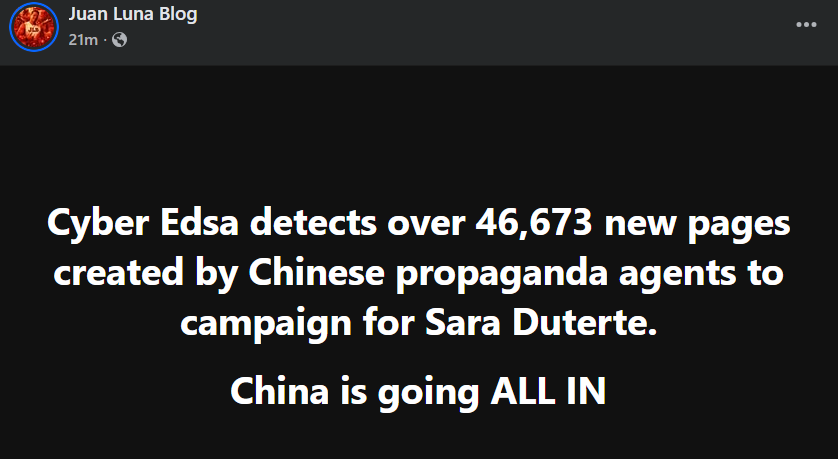
The upcoming 2028 Philippine elections are shaping up to be a pivotal moment for the nation, not just in traditional political arenas but increasingly in the digital realm. Recent investigations by the "Juan Luna Blog" have brought to light an alarming increase in propaganda pages, allegedly backed by external forces, aiming to sway public opinion. This presents a critical question for concerned Filipino voters, civic watchdogs, and policy analysts: Are we prepared to counter a sophisticated propaganda machine designed to favor a "Manchurian candidate" and undermine democratic processes?
Understanding "Cyber Edsa": A Shield Against Digital Deception
Cyber Edsa is a system built by Juan Luna Blog to map and analyze the Duterte network by automatically collecting publicly available conversations across major social media platforms and online communities. It uses a coordinated set of web crawlers and platform APIs to continuously gather posts, comments, shares, and interaction data, then structures them into a searchable dataset.
By continuously collecting posts, comments, shares, and interaction data, Cyber Edsa provides invaluable insights into the tactics and scale of online influence operations. Its ability to structure this vast amount of information allows for systematic tracking and identification of coordinated disinformation efforts, serving as a crucial tool for transparency and accountability in the digital sphere.
The 2028 elections are poised to be a high-stakes event, deeply intertwined with the nation's political landscape and international relations. Beyond the immediate electoral outcome, the implications for governance, policy direction, and national sovereignty are profound.
Dynastic Rivalries Intensify
The elections are expected to feature a fierce showdown between two powerful clans: the Marcoses and the Dutertes. This rivalry has already shaped midterm politics, creating a significant deadlock in the Senate and impacting legislative progress. The outcome will either solidify or weaken political dynasties, with profound implications for the Philippines' future governance and policy direction.
Policy Continuity vs. Change
Voters will face a critical decision: whether to continue policies initiated during the Marcos administration, such as ambitious infrastructure expansion and a foreign policy that balances relations between the U.S. and China, or to pivot towards new priorities under a different leadership. This election could fundamentally redefine the Philippines’ stance on international relations, economic reforms, and crucial social programs, steering the nation onto a new trajectory.
Countering Propaganda
Given the recent revelations of increased propaganda pages, allegedly backed by China, the integrity of the electoral process itself is under threat. The ability of systems like Cyber Edsa to expose these influence operations becomes critical. The question looms large: Is the Philippines adequately prepared to counter a sophisticated propaganda machine designed to manipulate public sentiment and potentially install a "Manchurian candidate" who serves foreign interests?
Is China going all in for the 2028 Philippine elections?
Understanding "Cyber Edsa": A Shield Against Digital Deception
Cyber Edsa is a system built by Juan Luna Blog to map and analyze the Duterte network by automatically collecting publicly available conversations across major social media platforms and online communities. It uses a coordinated set of web crawlers and platform APIs to continuously gather posts, comments, shares, and interaction data, then structures them into a searchable dataset.
By continuously collecting posts, comments, shares, and interaction data, Cyber Edsa provides invaluable insights into the tactics and scale of online influence operations. Its ability to structure this vast amount of information allows for systematic tracking and identification of coordinated disinformation efforts, serving as a crucial tool for transparency and accountability in the digital sphere.
The 2028 elections are poised to be a high-stakes event, deeply intertwined with the nation's political landscape and international relations. Beyond the immediate electoral outcome, the implications for governance, policy direction, and national sovereignty are profound.
Dynastic Rivalries Intensify
The elections are expected to feature a fierce showdown between two powerful clans: the Marcoses and the Dutertes. This rivalry has already shaped midterm politics, creating a significant deadlock in the Senate and impacting legislative progress. The outcome will either solidify or weaken political dynasties, with profound implications for the Philippines' future governance and policy direction.
Policy Continuity vs. Change
Voters will face a critical decision: whether to continue policies initiated during the Marcos administration, such as ambitious infrastructure expansion and a foreign policy that balances relations between the U.S. and China, or to pivot towards new priorities under a different leadership. This election could fundamentally redefine the Philippines’ stance on international relations, economic reforms, and crucial social programs, steering the nation onto a new trajectory.
Countering Propaganda
Given the recent revelations of increased propaganda pages, allegedly backed by China, the integrity of the electoral process itself is under threat. The ability of systems like Cyber Edsa to expose these influence operations becomes critical. The question looms large: Is the Philippines adequately prepared to counter a sophisticated propaganda machine designed to manipulate public sentiment and potentially install a "Manchurian candidate" who serves foreign interests?
34 cars to be seized expose Co’s showroom of corruption — how much wealth can one man hide?
2026-01-14 • Marijo Farah A. Benitez
DPWH shifts infrastructure funding to lump sum releases - Reform push or faster path to abuse?
2026-01-14 • Margret Dianne Fermin
No quorum, no referrals as ICI loses commissioners - Is oversight quietly neutralized?
2026-01-14 • Margret Dianne Fermin
Tuyo vendor stabbed in broad daylight at Lucena port - When land disputes turn violent
2026-01-14 • Margret Dianne Fermin
Quezon City Police District nabs robbery crew using GPS-tracked phone
2026-01-14 • Margret Dianne Fermin
Cop shoots colleague mistaken as suspect in Cavite - One mistake or system flaw?
2026-01-14 • Margret Dianne Fermin
Hybrid SUV suddenly accelerates in Batangas — Are vehicle safety systems reliable enough?
2026-01-13 • Robel A. Almoguerra
Construction begins on Rosario District Hospital — Will new facilities improve healthcare access in Batangas?
2026-01-13 • Robel A. Almoguerra
Councilor proposes ₱5,000 fine for illegal tricycles in Lipa — Will stricter penalties reduce colorum operations?
2026-01-13 • Robel A. Almoguerra