
From Davao Death Squad to ICC spotlight, Duterte's trail of bodies won’t stay buried
Marijo Farah A. Benitez • Ipinost noong 2026-02-25 10:58:23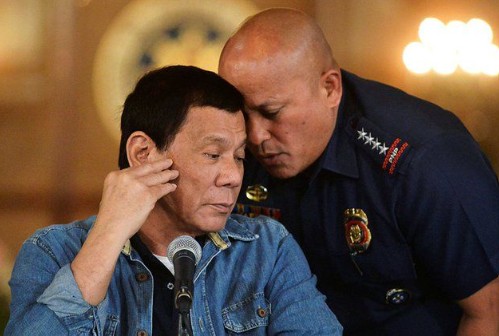
FEBRUARY 25, 2026 — The International Criminal Court (ICC) hearings on former president Rodrigo Duterte are unfolding like a grim replay of one of the Philippines’ darkest chapters. On Day Two of the confirmation of charges, prosecutors laid out chilling testimony: Duterte allegedly drew up “death lists,” personally naming supposed drug personalities, many of whom ended up dead. ICC prosecutor Edward Jeremy even played a clip of Duterte declaring, “I am the sole person responsible for it all.”
This isn’t just courtroom drama in The Hague but a mirror held up to us, the Filipino people. For years, we lived under a presidency that normalized extrajudicial killings, where jokes about murder drew laughter from officials in gilded halls while bodies piled up in the streets.
Jeremy alleged that children as young as 14 were suffocated with packing tape and strangled with wire. Imagine that: teenagers, silenced and discarded, their deaths sold to funeral homes.
The numbers that haunt us
Prosecutors say Duterte faces three counts of crimes against humanity, tied to at least 76 murders between 2013 and 2018. But they stress this is just a “fraction” of the thousands killed in his war on drugs. The poor were often targeted, precisely because they lacked the power to fight back.
Duterte himself, in one televised interview, bragged, “They say I killed 700? They undercounted … About 1,700.”
That’s not bluster. That’s not hyperbole. That’s a man taking credit for killings.
The Davao model goes national
The ICC prosecution argues that Duterte perfected his “Davao model” of death squads as mayor, then scaled it up when he became president. And he didn’t just bring the method — he brought the men.
Ronald dela Rosa, Bong Go, Dante Gierran, Vitaliano Aguirre II — names familiar to us all — were elevated to national posts. Some now sit in the Senate. And so the message was clear: loyalty to Duterte’s bloody campaign meant promotion and protection.
This is where the discourse gets uncomfortable. How many of us cheered when he promised to “kill criminals” during his campaign? How many shrugged when the nightly news flashed images of corpses with cardboard signs reading “pusher ako”?
The defense’s spin
Duterte’s lawyer insists his client is innocent, dismissing the speeches as “bluster and hyperbole.” He argues Duterte often ordered police to shoot only in self-defense. But prosecutors counter: the reality was murder at his direction, with rewards for those who carried it out.
And it’s worth asking — If these were indeed just jokes, why did thousands die? Why did families bury sons and daughters who never even had a chance to defend themselves?
The Filipino dilemma
Here at home, reactions are split. Some still defend Duterte, clinging to the narrative that his iron fist “cleaned up” the streets. Others see the ICC hearings as overdue accountability. Families of victims gathered at UP Diliman to watch the proceedings, hoping that justice — though delayed — might finally arrive.
But beyond the courtroom, the bigger question is about us. What does it say about our society that a president could openly joke about killings, boast about body counts, and still win the adoration of millions?
Why this matters now
The ICC hearings are not yet a trial. Judges will take up to 60 days to decide whether to proceed. Duterte, now 80, has skipped appearances, citing weakness and cognitive decline. His defense says he’s frail; prosecutors argue he’s avoiding the families of victims. Either way, the spectacle of a former Philippine president facing international charges is historic.
Whether or not the ICC proceeds, the discourse here at home is what matters most. Will we confront the legacy of the drug war honestly, or will we bury it alongside the thousands who died?
The conversation we need
This isn’t just about Duterte but about the culture of impunity that allowed killings to be normalized. It’s about the silence of institutions, the complicity of officials, and the willingness of ordinary Filipinos to look away.
So let’s talk. Let’s argue. Let’s debate. Because if we don’t, history will repeat itself.
(Image: X)