
Middle East war may drag 4-8 weeks — DFA warns Pinoys to brace for impact
Marijo Farah A. Benitez • Ipinost noong 2026-03-06 17:36:27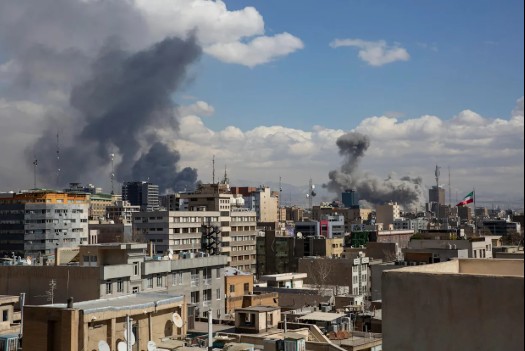
MARCH 6, 2026 — The Department of Foreign Affairs (DFA) has sounded the alarm: the brewing conflict in the Middle East could drag on for four to eight weeks, possibly longer. Assistant Secretary Germina Aguilar-Usudan, speaking before the Senate foreign relations committee, laid out the grim projection.
“Based on the reports from the various posts, we were informed that the US is trying to send more rockets to Iran, and then the (US) President is also trying to have a say on who will be the next leader of Iran. So, the projection from the reports that we received, it will take four weeks to eight weeks,” she said.
That’s not a short skirmish at all.
Aguilar-Usudan added, “It’s not like the previous Israel-Iran war, which only took 12 days … We received reports that Iran would like to negotiate but it was discounted by the Iranian government and Trump has said yesterday that he’s more ready for war this time.”
Her words paint a picture of a conflict that could spiral into a “protracted war,” one that forces the Philippines to rethink how it protects its overseas Filipino workers (OFWs) in the region.
The Department of National Defense (DND) echoed the uncertainty.
Assistant Secretary Jeffrey Hechanova admitted, “Mahirap po talagang magbigay ng legitimate timeline because may action and counter-action po kasi ‘yung bawat countries. So the situation can change very fast.”
In short, no one can pin down how long this will last.
For us, the immediate concern isn’t missiles flying over Manila — it’s the safety of our kababayans abroad. The DFA has already hinted at “unconventional assistance” for OFWs, a phrase that suggests contingency plans beyond the usual evacuation protocols. With thousands of Filipinos working in the Middle East, from domestic helpers to oil industry workers, the ripple effects of this war could hit home in ways we don’t always see: remittances, family stability, and even the emotional toll of uncertainty.
President Ferdinand “Bongbong” Marcos Jr. has urged restraint from all parties, hoping for a ceasefire. But let’s be real — when superpowers flex their muscles, smaller nations like ours are left bracing for impact. The government assures there’s no direct threat to Philippine security, but the indirect consequences — economic, social, and psychological — are already knocking at our door.
The question now is not just how long the war will last, but how prepared we are to shield our people from its fallout.
So, are we ready to face the storm even if it doesn’t hit us directly?
(Image: Yahoo News Singapore)