
Staggered fuel hikes start next week: government promises cushion, but will this really soften the blow?
Marijo Farah A. Benitez • Ipinost noong 2026-03-06 05:44:46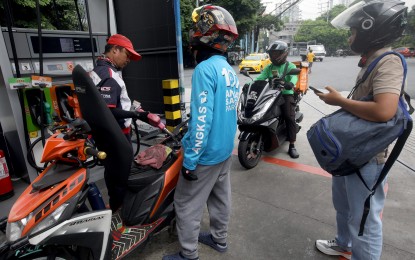
MARCH 6, 2026 — The Department of Energy (DOE) has confirmed that starting next week, the country will face staggered fuel price hikes. Oil companies, after a series of meetings with the DOE, have agreed to this approach — an attempt to cushion the impact of global market volatility on ordinary consumers.
Energy Secretary Sharon Garin explained that while firms incur losses when increases are staggered, “traditionally, firms have responded positively.” In other words, the industry is willing to take a hit so the public doesn’t absorb the shock all at once.
The numbers are staggering. Based on three days of trading at the Mean of Platts Singapore, kerosene could spike by ₱28 per liter, diesel by ₱15, and gasoline by ₱7. These aren’t minor adjustments — they’re the kind of jumps that ripple through every household budget, from jeepney fares to the price of a kilo of rice.
Garin has already warned against panic buying, reminding the public, “If we do that, the market will be distorted. Our whole system will be destroyed; instead of two months (of reserves), it will be only one month.”
The bottom line is, hoarding will only make things worse.
The backdrop is global chaos. The Strait of Hormuz, a critical artery for 20 percent of the world’s oil supply, has been closed by Iran amid escalating conflict with the US and Israel.
Analysts at S&P Global said, “If the strait were to close for an extended period of time, it would be among the greatest supply shocks in history.”
Imagine oil shooting past $100 per barrel — that’s the nightmare scenario. For now, experts believe the closure will be temporary, but the uncertainty is enough to rattle markets and, inevitably, our wallets.
Closer to home, the DOE is scrambling to secure at least one million barrels of diesel as a buffer. Rino Abad of the Oil Industry Management Bureau admitted that the country consumes around 200,000 barrels daily, so the planned procurement is barely a five-day cushion. He’s pushing for three million barrels, especially since China has suspended refined fuel exports.
“That’s a game changer because, diesel-wise, I think we’re importing around 30 percent from China. Hopefully South Korea won’t follow suit, because we import around 40 percent from them,” Abad said.
Simply put, if our suppliers pull back, we’re in big trouble.
Economists are watching inflation like hawks. February’s print already hit a 13-month high, and National Statistician Claire Dennis Mapa warned that fuel hikes will spill over into food, water, and transport. Jun Neri of BPI noted that if the conflict drags on, inflation could stay elevated, forcing the Bangko Sentral ng Pilipinas to hold off on cutting rates, or even consider a hike.
Now that’s a direct hit on loans, mortgages, and the cost of doing business.
Lawmakers are scrambling for solutions as well. Senator Erwin Tulfo filed a bill to suspend VAT and excise taxes on fuel once prices hit $80 per barrel.
“We must ensure the welfare of the ordinary Filipinos is prioritized amid the crisis,” Tulfo said.
Meanwhile, Rep. Nathan Oducado of 1Tahanan party-list filed a resolution to probe the looming oil price shocks, stressing that “transportation fares, electricity rates, and food prices also go up, and ordinary Filipinos suffer the most.”
These are not abstract debates but about whether families can afford to commute, eat, and keep the lights on.
And then there’s the moral voice.
Bishop Gerardo Alminaza of Caritas Philippines reminded us that this crisis is also a wake-up call: “We cannot continue investing in a system that fuels both climate destruction and conflict. Peace is built on justice. And justice today demands an energy conversion.”
He’s right. The Philippines is blessed with solar, wind, geothermal, and marine energy. Yet here we are, still chained to imported oil, vulnerable to every geopolitical tremor.
So, what does this all mean for us? Staggered hikes may soften the blow, but they don’t erase it. The DOE’s buffer buys us time, but not security. Lawmakers’ proposals may offer relief, but only if they pass quickly. And the call for renewable energy is louder than ever, because every peso we spend on imported oil is a peso we could have invested in our own future.
The question now is simple but urgent: How long will we keep paying the price for a global oil system we don’t (and can’t) control?
(Image: Philippine News Agency)