
Cardboard cutout of Iran’s new leader appears at Tehran rally — What message does it send?
Robel A. Almoguerra • Ipinost noong 2026-03-11 23:32:55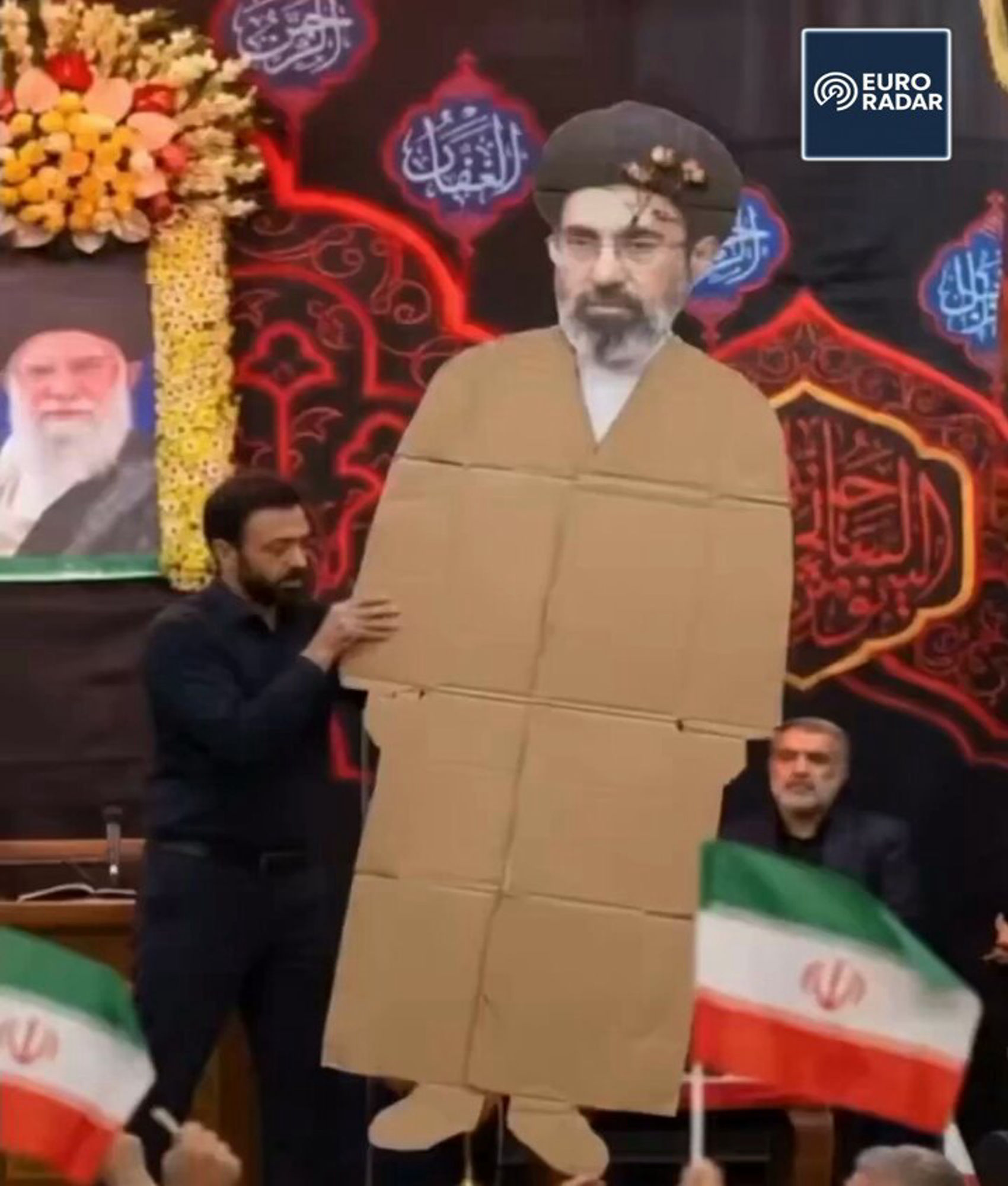
TEHRAN, Iran — An unusual scene from a rally in Tehran has gone viral on social media after supporters were seen pledging loyalty to a cardboard cutout of Iran’s reported new leader, Mojtaba Khamenei.
Videos circulating online show a life-size cardboard standee of the figure placed prominently on stage during a gathering attended by supporters, military officials, and members of militia groups. The rally was reportedly organized to demonstrate public support for the country’s leadership following the death of former supreme leader Ali Khamenei.
Instead of appearing in person, the standee served as a symbolic representation of the leader while attendees publicly pledged loyalty. The unusual arrangement quickly caught the attention of social media users, many of whom expressed surprise and humor at the sight of a cardboard cutout being used during what appeared to be a politically significant gathering.
The rally took place amid rising tensions across the Middle East, where regional conflicts and geopolitical rivalries have intensified in recent weeks. Analysts say that political symbolism often plays a strong role in moments of uncertainty, especially during transitions of leadership.
Supporters of the government insisted that the event demonstrated continued unity and loyalty to the country’s leadership despite the volatile situation in the region. For them, the rally was meant to send a message that the political system remains intact even as tensions escalate.
However, critics and observers online questioned the optics of the moment, arguing that the use of a cardboard stand-in during such an event could invite speculation about the circumstances surrounding the leader’s absence.
As images and videos of the rally continue to circulate, the incident highlights how modern political events are increasingly shaped by viral visuals and online reactions, sometimes overshadowing the intended political message.
In a time when symbolism can travel faster than official explanations, the situation raises a broader question: When political symbolism becomes viral content, does it strengthen public support—or invite deeper scrutiny?
(Larawan mula kay sa: X)