
31 hours, 4 deaths in Quiapo’s longest Traslacion — faith or fanaticism?
Marijo Farah A. Benitez • Ipinost noong 2026-01-11 10:12:55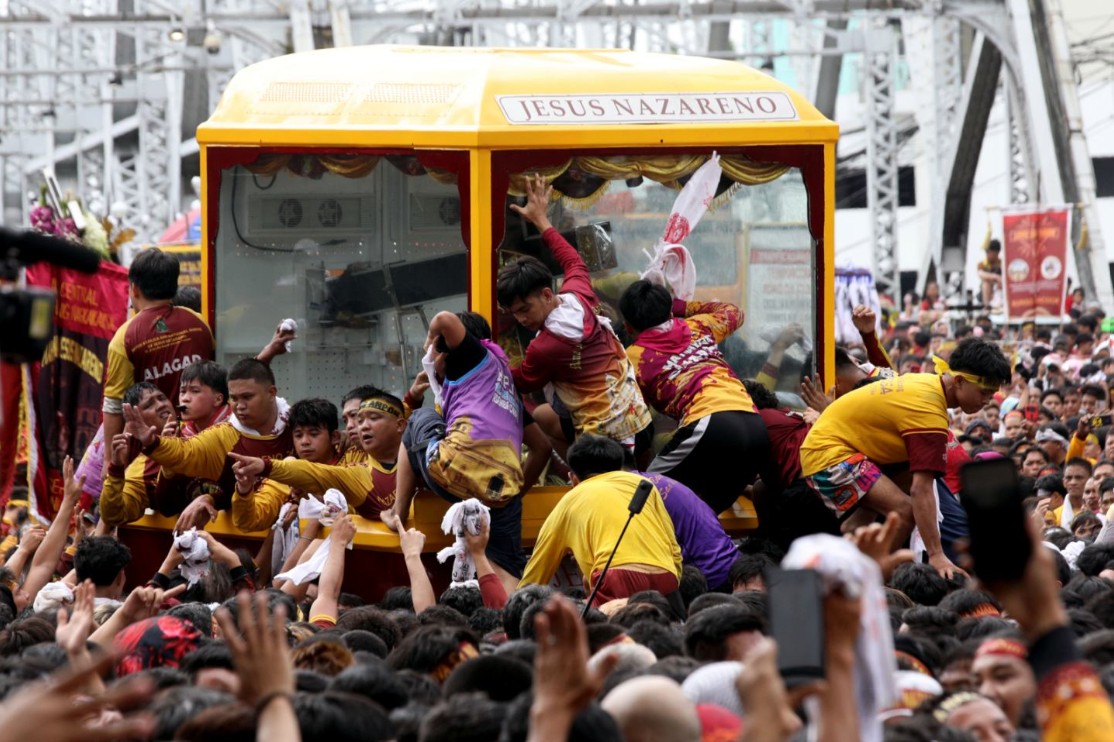
JANUARY 11, 2026 — The image of the Black Nazarene finally returned to Quiapo Church at 10:50 a.m. on January 10, after a grueling 31-hour journey that began at dawn from the Quirino Grandstand. The longest Traslacion in history drew an estimated 9.6 million devotees — a staggering number that speaks volumes about the depth of faith in this country. But it also raises an uncomfortable question: At what cost are we practicing this devotion, and has it already crossed the line into fanaticism?
The annual Traslacion is supposed to be a solemn act of faith, a collective prayer on the streets of Manila. Yet every year, the headlines are the same: injuries, deaths, chaos, and littered streets.
This year was no different. Authorities confirmed four deaths and more than 1,000 medical cases, ranging from crushed toes to hypertension, dizziness, and even devotees collapsing from exhaustion. The Department of Health reported that most of those injured were young men, aged 15 to 24.
What does it say about us when scores of Filipinos willingly risk their lives in the name of devotion?
Even the clergy themselves admitted to confusion and disappointment.
Fr. Robert Arellano, spokesperson for Traslacion 2026, said, "Kailangan talaga nila ng pahinga para mas lalo nilang epektibong magawa yung kanilang mga tungkulin, kasi mga tao lamang tayo. May limitasyon ang ating katawan."
(They really need to rest so they can perform their duties more effectively, because we are only human. Our bodies have limits.)
His words ring true, but they also highlight the irony. If this is supposed to be a spiritual exercise, why does it demand such physical suffering that borders on self-destruction?
The chaos at San Sebastian Church, for instance, where the andas was expected to enter (an unprecedented change in the usual route) was another telling moment. Parish priest Fr. Ramon Jade Licuanan admitted feeling humiliated when the andas was pulled away by the devotess themselves from its expected route.
"Maybe very sad and disappointing. You feel humiliated and embarrassed. I don't mind because I know God is in control," he said.
His humility is admirable, but the incident reveals something deeper — devotees seized control of the procession, disregarding instructions from the Church itself.
Is this still devotion, or has the crowd become bigger than the faith it claims to serve?
One devotee from Bulacan, captured the sentiment of many: "Marami po talagang nalulungkot, nagrereklamo dahil hindi dito (sa Quiapo) uuwi. Pero nakita niyo po ang lahat ng deboto, sila ang gumagawa ng paraan. Hindi ang pari ang magdedesisyon, ang mga deboto."
(Many were really saddened, complaining that it would not return here in Quiapo. But you saw all the devotees, they were the ones making a way. It’s not the priest who decides, it’s the devotees.)
Her words reveal the raw power of the masses — faith turned into force, devotion turned into defiance.
Traslacion’s ‘battlefield’
The Traslacion has become less about prayer and more about spectacle. The pushing, the climbing, the grabbing of ropes, the endless shouting of “Viva!” — these are not acts of quiet reflection but of frenzy. Streets are left littered, medical teams are overwhelmed, and families mourn loved ones who never made it home.
Is this really the kind of devotion we want to pass on to the next generation?
Faith should unite, not endanger. It should inspire respect, not chaos. It should bring peace, not casualties. Yet every January, Manila becomes a battlefield of bodies, with millions fighting for a fleeting touch of the andas. And while the Church promises evaluation and reflection, the cycle repeats year after year.
How many more deaths will it take before we admit that something has gone terribly wrong?
The Traslacion is undeniably part of our identity as Filipinos. It is a tradition that has survived centuries, a symbol of resilience and faith. But traditions evolve, and perhaps it’s time we ask ourselves: Should devotion always mean danger? Should faith always mean frenzy? Or can we reimagine this ritual into something safer, more respectful, and truly spiritual?
The Black Nazarene will always be a powerful symbol of hope. But hope should not come at the cost of human lives. If we truly believe in the message of Christ, then maybe the greatest act of devotion is not in risking death on the streets, but in living lives that reflect compassion, discipline, and respect.
When “devotion” ends in casualties, is this truly Christ’s message or our own distortion of it?
(Image: Philippine News Agency | Facebook)