
Ghost senator: Is this how public service works?
Marijo Farah A. Benitez • Ipinost noong 2026-01-11 15:22:05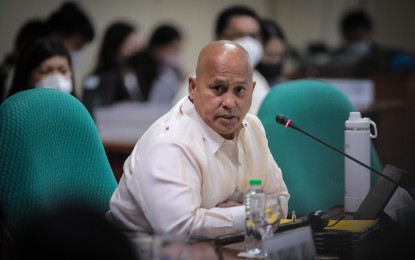
JANUARY 11, 2026 — Senate President Vicente “Tito” Sotto III has admitted he hasn’t heard back from Sen. Ronald “Bato” dela Rosa since November last year. Despite several text messages — some even personal, thanking him for the warm rapport between their families — Sotto said, “I texted him two to three times, but I never received any reply.”
That silence is deafening. And it raises a question that every Filipino should be asking: Is it acceptable for a senator, elected by millions, to simply vanish from the halls of Congress?
Let’s put this in perspective. If a regular employee stopped showing up for work for months, ignored group chats, and failed to respond to their boss’ messages, would that be tolerated? Of course not. HR would have stepped in, payroll would have been frozen, and accountability would have been demanded.
Yet here we are, watching a senator — whose salary comes from taxpayers — skip work without consequence.
Sotto himself admitted, “He chooses not to come in, but his office is still functioning.”
Functioning how? Through staff who continue to process paperwork? Through assistants who keep the lights on? But is that really the essence of public service?
Filipinos didn’t elect staffers. They elected senators to debate, legislate, and represent them in person.
The backdrop of this disappearance is even more troubling. Ombudsman Jesus Crispin Remulla claimed in a radio interview that the International Criminal Court (ICC) had issued an arrest warrant for Dela Rosa.
Let’s not forget: as former President Rodrigo Duterte’s first national police chief, Dela Rosa spearheaded the bloody war on drugs that left thousands dead. Duterte himself is now detained in The Hague, facing trial for crimes against humanity.
So what does it mean when one of the architects of that campaign suddenly goes missing? Is this avoidance of accountability? Is this fear of facing justice? Or is this simply a senator deciding that his personal predicament outweighs his duty to the nation?
Sotto tried to soften the blow, saying, “He should answer to those who voted for him. As long as his office does its work, then we keep the office running.”
But is that enough? Shouldn’t the Senate, as an institution, demand more from its members? After all, there’s a rule that allows the Senate president to order the arrest of a senator if his vote is crucial.
Imagine that — only when his vote is needed can he be compelled to show up. Is that really the bar we’ve set for accountability?
The irony deepens when we recall the case of Sen. Panfilo “Ping” Lacson, who once went into hiding himself. Lacson even joked about Dela Rosa’s situation saying that Bato texted him, “Sir, I’m going to break your record for hiding, then followed by a ha-ha.”
Lacson added, “My advice to him was that if he has no intention of surrendering, he should hide well.”
But Lacson’s own disappearance years ago led to his office being shut down, funding withdrawn, and his passport canceled. So why is Dela Rosa’s case being treated differently? Why is his office still funded, his absence tolerated, and his silence excused?
This is where the public should step in. Senators are not above accountability. They are not immune from the standards we apply to ordinary workers. If anything, they should be held to higher standards because they represent the people.
If a senator can disappear for months, ignore messages, and still keep his office running, what does that say about our democracy? What does that say about the respect owed to the Filipino people who voted him into power?
Public service is about showing up, facing the music, and doing the work. A senator who disappears without explanation is not serving the people — he is abandoning them.
If ordinary workers can’t disappear from their jobs, why should senators get a free pass? What’s your take?
(Image: Philippine News Agency)