
Sackfuls of trash pulled from Biñan River — Are we ignoring the real cause of flooding?
Robel A. Almoguerra • Ipinost noong 2026-01-23 22:34:25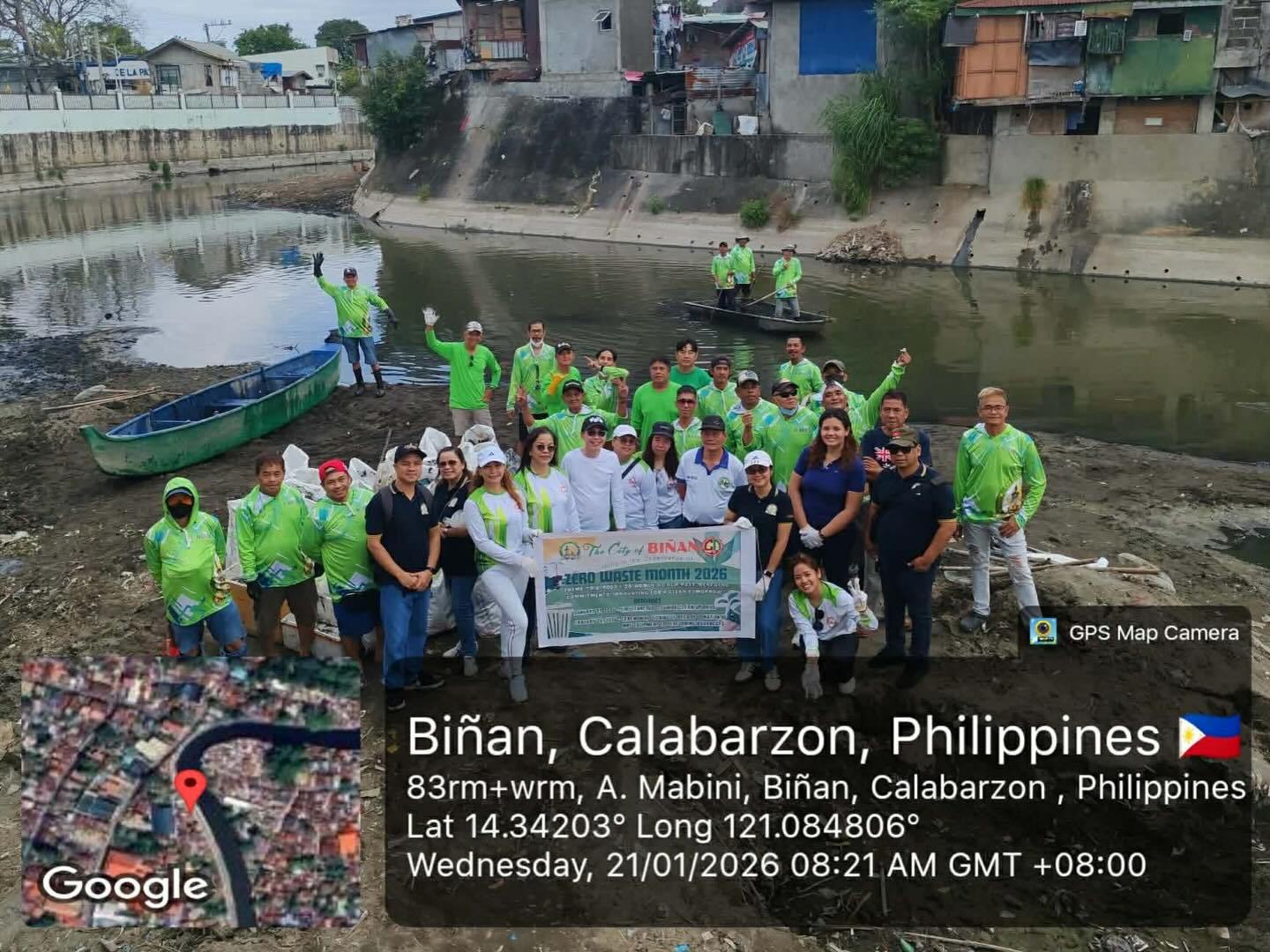
Biñan City, Laguna — Sackfuls of garbage, mostly plastic waste, were unearthed from the Biñan River following a massive clean-up drive conducted by the local government on Wednesday, January 21. The activity was led by the City Environment and Natural Resources Office (CENRO) of Biñan, in coordination with the Department of the Interior and Local Government (DILG)–Biñan and all 24 barangays in the city. Beyond the physical cleanup, the effort carried a clear message: improper waste disposal eventually makes everyone suffer.
The volume of trash collected paints a troubling picture of how rivers have become silent dumping grounds. For years, the Biñan River has overflowed during the rainy season, disrupting livelihoods, damaging properties, and endangering lives. While heavy rainfall is often blamed for flooding, the accumulation of garbage—especially non-biodegradable plastics—has undeniably worsened the situation by clogging waterways and restricting natural water flow.
This clean-up drive was not only an environmental activity but also a symbolic reminder tied to the observance of Zero Waste Month and the 25th anniversary of the signing of Republic Act 9003, or the Ecological Solid Waste Management Act. Passed to institutionalize proper waste segregation, recycling, and disposal, the law remains a powerful framework—yet its recurring relevance raises a difficult question: why, after 25 years, are our rivers still filled with trash? While the local government deserves recognition for taking action, clean-up drives alone are not a long-term solution. They address the symptoms, not the root cause. Without consistent discipline among households, strict enforcement of waste laws, and a shift in public mindset, the river will continue to collect what society throws away—both literally and figuratively. The call of the Biñan LGU is clear: consider not only human convenience, but the welfare of nature itself. Environmental responsibility does not begin during organized clean-ups; it starts in daily habits, in homes, and in communities. As sacks of trash are removed from the river today, one lingering question remains: are we truly solving the problem of flooding and pollution, or merely cleaning up the mess until the next rainy season exposes it again? (Larawan mula sa: City of Biñan / Facebook)