
Anti-epal directive gains proof in Pasig — compliance shown, momentum building?
Margret Dianne Fermin • Ipinost noong 2026-02-03 14:18:44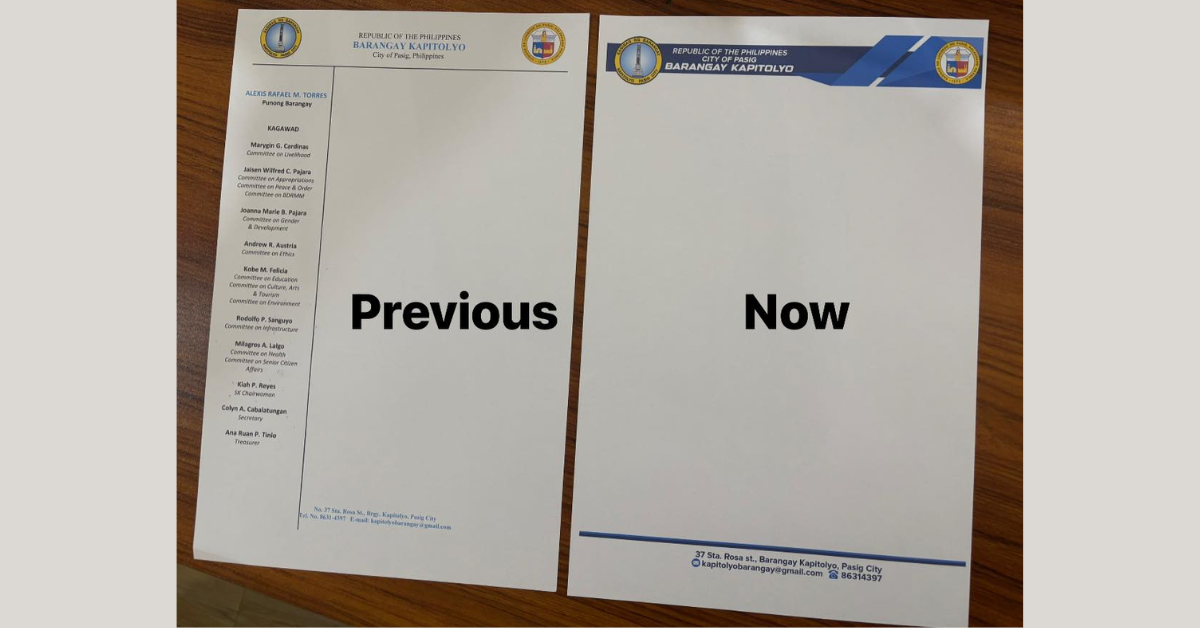
PASIG CITY, Philippines — February 3, 2026 — Barangay Kapitolyo captain Alex Torres posted on Facebook a photo of their new official letterhead, which no longer bears the names of barangay council members.
“Mapapansin nating wala na ang pangalan ng Barangay Council sa gilid. Parte ito ng ating effort na umiwas sa tradisyunal na patronage politics at itaguyod ang Anti-Epal ordinance,” Torres wrote on Saturday afternoon. His post quickly went viral, garnering more than 6,000 heart and like reactions and 1,800 shares as of writing.
Earlier that day, the DILG issued Memorandum Circular No. 2026-006, directing all provincial, city, municipal, and barangay officials, as well as DILG central, regional, and field offices, to strictly enforce the “Anti-Epal” policy nationwide. The circular requires that “no public official’s name, photo, logo, initials, color motif, slogan, or any identifying symbol appears on project signages, markers, tarpaulins, and similar materials funded by public money.”
Interior Secretary Jonvic Remulla emphasized, “Government programs are not personal billboards. These are funded by taxpayers and must reflect public service, not political credit grabbing.”
Torres explained that the removal of names from official documents is a small but significant step toward systemic change. “Maliit man pero makikita dito ang malinaw nating katayuan sa pagbago ng sistema. Hindi dapat pulitiko at personalidad ang tinitignan sa paggogobyerno pero ang sistema at institusyon na kailangan ng reporma,” he added.
The Anti-Epal policy has long been a demand of transparency advocates, who argue that politicians often use government projects funded by taxpayers to promote themselves. The DILG cited the 1987 Constitution’s principle that public office is a public trust, the Code of Conduct and Ethical Standards for Public Officials and Employees, and Commission on Audit rules that classify personalized displays as unnecessary and improper use of public funds.
This latest directive is part of a broader push to curb patronage politics in the Philippines, where it has been common practice for local officials to plaster their names and faces on public infrastructure such as waiting sheds, bridges, and school buildings. By removing these identifiers, the government hopes to shift focus away from personalities and toward institutions and systems that deliver genuine public service.
The move has been widely praised online, with Torres’ post serving as a concrete example of compliance and reform. Advocates say that if strictly implemented, the policy could help dismantle entrenched political practices and foster a culture of accountability.
As the directive takes effect nationwide, the DILG has warned that non-compliance could result in administrative sanctions. For now, Barangay Kapitolyo’s new letterhead stands as a symbol of the government’s effort to end “epal” politics and promote transparency in governance.
Proof That Anti-Epal Can Work
Policy often feels abstract until it shows up in everyday practice. When a barangay removes names from official materials, reform becomes visible, practical, and easy to understand for residents who interact with local government daily.
This kind of compliance turns national directives into lived experience. By aligning with standards set by the Department of the Interior and Local Government, local officials demonstrate that rules on transparency are not symbolic but operational.
If small, visible choices can rebuild trust at the grassroots, what other long-standing political habits might change once institutions, not personalities, take center stage?
Image from Alex Torres/Facebook