
Pinoys still say women belong at home, 83% agree in new survey — are we stuck in the past?
Marijo Farah A. Benitez • Ipinost noong 2026-03-05 08:32:55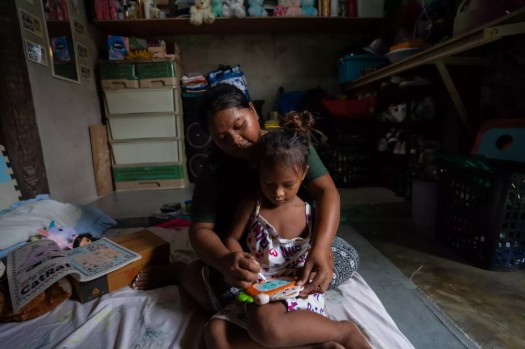
MARCH 5, 2026 — The latest Social Weather Stations (SWS) survey has spoken: 83 percent of Filipinos agreed that “a man’s job is to earn money; a woman’s job is to look after home and family.” That’s not just a majority — it’s an overwhelming cultural statement.
Conducted in late November 2025, the survey shows that traditional views on women’s roles remain deeply entrenched, even as the country has seen more women in politics, business, and media than ever before.
Let’s break this down. The net agreement score of +75 is classified as “extremely strong,” and it’s even higher than the +69 recorded back in 2021. In other words, the belief that women belong in the home isn’t fading — it’s growing.
Add to that the 81 percent who said being a housewife is just as fulfilling as paid work, and the 75 percent who agreed that most women really want a home and children, and you get a picture of a society still clinging to traditional family ideals.
But here’s where it gets complicated. The same survey found that 71 percent agreed a working mother can still build a warm and secure relationship with her children. That’s a progressive nod, suggesting Filipinos recognize that women can balance both work and family. Yet, 63 percent also said a preschool child is likely to suffer if the mother works.
Talk about contradictions — Filipinos are saying “yes, women can work,” but also “maybe the kids will suffer.” Which side of the fence are we really on?
Interestingly, women themselves showed stronger agreement than men on certain statements. For example, women scored higher on the belief that being a housewife is fulfilling (+74 vs. +67 among men) and that preschool children may suffer if their mother works (+46 vs. +28).
That’s a twist: women are reinforcing the very expectations often criticized as limiting. Is this acceptance, resignation, or simply pride in the role of homemaker?
Now, let’s put this in the Philippine context. We live in a country where women have historically been powerful — think Corazon Aquino, Gloria Macapagal-Arroyo, and countless female leaders in local government, business, and media. Yet, at the household level, the narrative remains conservative.
Why? Is it because economic realities still push men into breadwinning roles while women juggle unpaid domestic labor? Or is it because cultural pride in motherhood and homemaking continues to outweigh the lure of career advancement?
The survey also revealed that half of respondents (51 percent) agreed family life suffers when the woman has a full-time job. That’s a sobering thought in a nation where more and more women are entering the workforce out of necessity, not choice. Inflation, rising costs, and stagnant wages mean dual-income households are often the only way to survive.
So if family life “suffers,” is it really because women work or because society hasn’t adjusted to support them with childcare, flexible work, and shared domestic responsibilities?
Despite these traditional views, Filipinas are still breaking barriers. They dominate classrooms, lead boardrooms, and run households with grit. The contradiction between survey numbers and lived reality is glaring. We may say “home first,” but the truth is, women are already everywhere — working, leading, and proving that fulfillment isn’t one-size-fits-all.
So the question is, are we holding on to tradition out of genuine belief, or are we afraid to admit that the Filipino family is evolving faster than our mindset?
How long will we keep telling women their place is at home when the world — and their own ambitions — say otherwise?
(Image: Unicef)