
P10 per liter cut powers PUVs through Metro’s fuel storm — but is it enough to keep wheels turning?
Marijo Farah A. Benitez • Ipinost noong 2026-04-14 17:10:54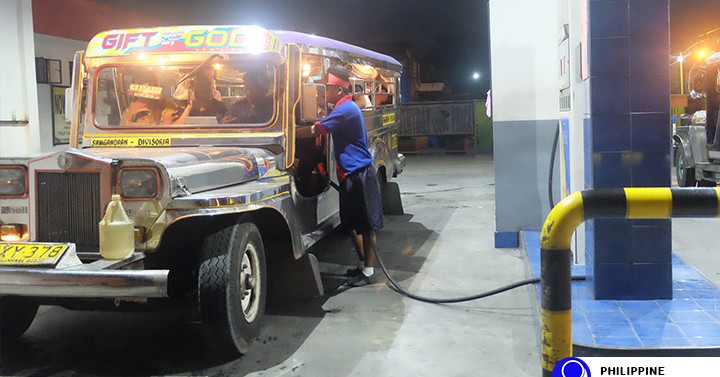
APRIL 14, 2026 — The government has finally rolled out its long-promised P10-per-liter diesel discount for public utility vehicles (PUVs), and jeepney drivers across Metro Manila are watching closely. The Department of Energy (DOE) launched the program this week, with Secretary Sharon Garin announcing that 33 gas stations are already participating, while 19 more are expected to join soon.
The pilot run covers 52 accredited stations in the National Capital Region, targeting routes where thousands of commuters rely daily on jeepneys and UV Express vans.
“This is a pilot or Phase 1 because this is a new program. We are targeting 52 gas stations in NCR … so far, there are 33 enrolled, the other 19 ongoing,” Garin explained.
The initiative is part of the Unified Package for Livelihood, Industry, Food and Transport (UPLIFT), a government effort to cushion the transport sector from the relentless climb of fuel prices.
The mechanics are straightforward: qualified PUV operators can avail of a P10 discount per liter of diesel, capped at 150 liters per week. That’s a maximum of ₱1,500 in weekly subsidy.
But here’s the catch — unused allocations don’t roll over.
As Transportation Secretary Giovanni Lopez put it, “Kapag hindi natin naubos ‘yung ₱1,500 … hindi. So, kailangan na maubos that week.”
(If we don’t consume the ₱1,500, it won’t carry over. It must be used within the week.)
For drivers, this is both a blessing and a challenge. On one hand, it’s a direct cut in operational costs. On the other, the cap means they must plan fuel consumption carefully, or risk losing part of the subsidy.
And let’s be real—₱1,500 a week is helpful, but does it truly offset the rising costs of maintenance, boundary payments, and daily living expenses?
How to avail of the subsidy
- Refuel diesel at participating DOE-accredited gas stations.
- Inform the fuel attendant that you are availing of the subsidy.
- Provide your registered PUV plate number for system encoding.
- The ₱10 per liter discount will be automatically deducted from your total bill.
Participating pilot stations in Metro Manila
Here’s the initial list of stations where drivers can claim the discount:
- Quezon City – Fairview
Unioil Petroleum Philippines, Inc. – Commonwealth Avenue
Petron Corporation (Win Power Enterprises) – Commonwealth Avenue
Aquivel Petron – Commonwealth Avenue
- Quezon City – Sta. Cruz
Shell Pilipinas Corporation (Heroes Hill Shell Service Station) – Quezon Avenue, corner Gen. Lim St.
- Quezon City – La Loma
Seaoil Philippines, Inc. (Gazz Up, Inc.) – A. Bonifacio St., corner Scout Alcaraz St.
- Pasig City – Santolan
Shell Pilipinas Corporation (Presam Shell Service Center) – Marcos Highway, corner Santolan
- Pasig City – Dela Paz
Chevron Philippines Inc. (Bidang Motorista Fuel Station) – Don Mariano Marcos Highway
- Manila – Sampaloc
Metro Oil Subic, Inc. – España Boulevard
- Muntinlupa City – Alabang
Phoenix Petroleum Philippines Inc. (Phoenix Southern Petroleum Corp.) – Alabang-Zapote Road, Madrigal Business Park
- Malabon City – Longos
Petron Corporation (Petron Extreme Gas Station) – C-4 Road, Brgy. Longos
These stations cover major routes like Commonwealth, Quezon Avenue–España, Zapote Road, A. Bonifacio Avenue, Rizal Avenue, and Marcos Highway — arteries that carry thousands of commuters daily.
The DOE estimates that once fully rolled out nationwide, the program could benefit over 171,000 PUV units. In Metro Manila alone, around 33,000 units operate daily.
For commuters, this subsidy could mean fewer fare hikes and more reliable service. For drivers, it’s a lifeline, though a temporary one.
Fuel prices are volatile, driven by global tensions and market shifts. A ₱10 discount helps today, but what happens when oil spikes again tomorrow? And what about the long-term modernization of jeepneys, the push for cleaner energy, and the broader question of sustainable transport?
President Ferdinand Marcos Jr. ordered this subsidy to ensure commuters still have access to affordable public transport. It’s a concrete step, yes, but we know too well that short-term relief often masks deeper structural problems. Drivers may welcome the discount, but they also demand stability, predictability, and a system that doesn’t leave them scrambling every time global oil markets shake.
Do you think a ₱10 diesel discount will really drive lasting change, or is it just another stopgap on the road to nowhere?
(Image: Philippine News Agency)