
Meralco billing debate goes viral — Middle class questions subsidies for 4Ps, seniors
Margret Dianne Fermin • Ipinost noong 2026-04-24 10:32:45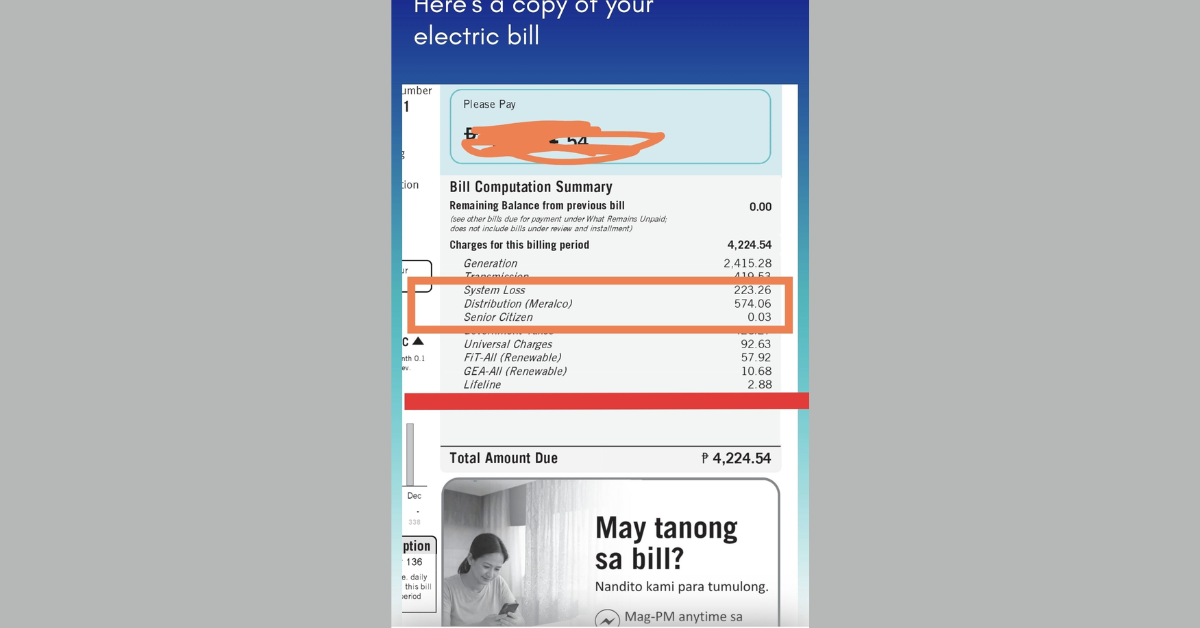
A sarcastic Facebook post by Mary Rose Dig has gone viral, reigniting public debate over why ordinary consumers shoulder subsidies in their Meralco bills.
“Ang galing nga ng Meralco ???? System loss—bayad ng mga tao para sa kuryente ng mga nag jumper at nag direct sa linya ng Meralco. Senior—bayad para sa mga discount na binibigay nila sa mga senior buti senior na si mama this year Leonisa Tajanlangit Dig. Lifeline—bayad para sa bawas or libreng kuryente ng mga 4Ps/low income. Good job Middle class people… we have income tax, may tax pa mga ni consume natin including the Meralco bill and nag contribute pa tayo sa pakulo ng Gobyerno na sila dapat nagbabayad,” she wrote, capturing frustrations of many middle-class households.
The charges Dig mentioned are mandated by law. System loss covers electricity lost due to technical inefficiencies and pilferage, capped by the Energy Regulatory Commission (ERC). Senior citizen discounts are mandated under Republic Act 9994, granting a 5% discount on electricity consumption not exceeding 100 kWh per month.
Lifeline subsidies, updated under Republic Act 11552, provide discounts to low-income households and Pantawid Pamilyang Pilipino Program (4Ps) beneficiaries consuming 100 kWh or less monthly.
These subsidies are funded through cross-subsidization, meaning regular paying customers shoulder the cost to ensure vulnerable groups maintain access to electricity. The ERC has defended this as a “socialized pricing mechanism” essential for energy equity. Meralco has also explained that these charges are part of government-mandated programs, not discretionary company policies.
Critics argue that the government should directly fund these subsidies through the national budget instead of passing them on to consumers. Middle-class families, already burdened by income taxes, VAT on utilities, and inflation, feel the impact most acutely.
Electricity prices in the Philippines remain among the highest in Southeast Asia, making subsidies crucial for poor households but contentious for those who pay full rates. According to government data, millions of households qualify for lifeline discounts, yet only a fraction have registered.
The viral post underscores a growing sentiment: while social protection programs are necessary, their funding mechanism through utility bills raises questions of fairness. As electricity costs continue to climb, the balance between social equity and consumer burden remains one of the most pressing issues in Philippine energy policy.