
ARAL gains momentum: Can reading recovery finally rewrite the future of PH education?
Marijo Farah A. Benitez • Ipinost noong 2026-01-26 12:27:09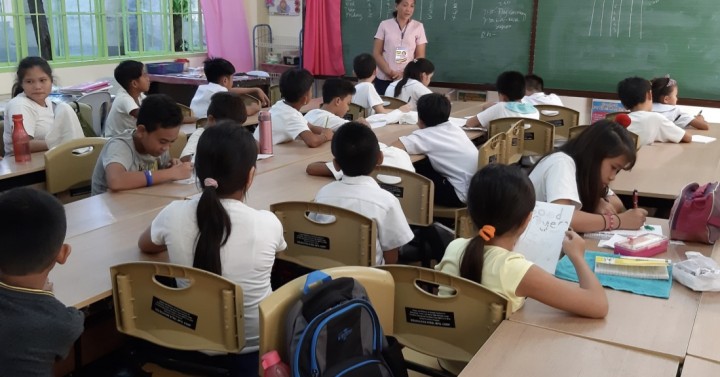
JANUARY 25, 2026 — When was the last time you heard good news about Philippine public schools? For years, headlines have been dominated by shortages, learning gaps, and the pandemic’s devastating toll on literacy. But now, a new story is unfolding — and it’s one that deserves our attention.
The Department of Education’s Academic Recovery and Accessible Learning (ARAL) Program, rolled out nationwide just last September, is already showing dramatic results. According to DepEd’s Middle-of-School-Year (MOSY) assessments for SY 2025–2026, several schools have posted 30 to 40 percent increases in reading proficiency and grade-level readiness. That’s not just improvement — it’s a turnaround.
From Marikina to Zamboanga: schools breaking barriers
Take Malanday Elementary School in Marikina City. At the start of the school year, only 57.26 percent of its learners were considered “Developing, Transitioning, and Grade-Level Ready.” By midyear, that number skyrocketed to 94.03 percent. That’s a 36.77 percent leap in reading readiness — proof that foundational skills can be rebuilt when the right support is in place.
And it’s not just Metro Manila. Don Gregorio Evangelista Memorial School in Zamboanga City improved by 19.06 percent, while schools in Cabuyao and Antipolo also ranked among the most improved.
These aren’t isolated wins; they’re signals of a broader shift.
Near-universal readiness in Quezon City
Meanwhile, Melencio M. Castelo Elementary School in Quezon City hit 100 percent readiness in the “Total Grade-Ready + Two Levels Down” category. Imagine that — every single learner reaching grade-level benchmarks.
For a country long plagued by literacy gaps, this is nothing short of historic.
The comeback kids
The most striking gains, however, are happening in high schools. San Jose National High School in Antipolo City jumped from 61.70 percent readiness at the beginning of the year to 100 percent by midyear. Tanza National Comprehensive High School in Cavite posted a 42.85 percent surge — the largest among secondary schools.
These numbers matter. Older students were among the hardest hit by pandemic disruptions. If they can rebound this quickly, doesn’t it challenge the narrative that learning loss is irreversible?
Proof that the crisis can be solved
Dr. Karol Mark Yee, Executive Director of EDCOM 2, captured the moment perfectly: “The initial analysis of the 2025–2026 MOSY assessments reveals a compelling story of resilience and progress in our public schools.”
He added, “Their performance proves that with the right interventions, we can successfully bridge the gap from ‘emerging’ to ‘grade-ready.’ This clearly demonstrates that we have the capacity to put an end to this learning crisis — if we act urgently, learn how to prioritize, and invest properly.”
That’s the challenge, isn’t it? Acting urgently. Prioritizing. Investing.
Nationwide impact
Beyond the top-performing schools, DepEd reports that reading readiness scores rose by about five points in Grades 3 to 6, benefiting 3.42 million learners. For Grades 7 to 10, scores climbed six to nine points, helping 1.72 million students inch closer to grade-level proficiency.
This isn’t just about statistics but about millions of Filipino children who now have a better shot at understanding their lessons, passing their subjects, and eventually, building futures that aren’t defined by illiteracy.
Scaling up: the big test ahead
DepEd plans to expand ARAL to reach 6.7 million learners by SY 2026–2027. Over 440,000 tutors — including teachers and volunteers — will be mobilized nationwide. That’s ambitious.
But can the government sustain this momentum?
We’ve seen programs start strong only to fizzle out due to lack of funding, political will, or bureaucratic inefficiency. Will ARAL be different? Or will it become another “good idea” buried under the weight of systemic problems?
The bigger picture
Let’s not forget: EDCOM 2’s upcoming Final Report will also highlight the urgent challenges still facing our education system — classroom shortages, uneven teacher deployment, and resource gaps. ARAL is a bright spot, yes, but it’s not a silver bullet.
Still, the fact that schools are already posting dramatic gains tells us something important: learning recovery is possible. The crisis is not permanent. And if we can fix reading, we can start fixing everything else.
Why this matters to you
Why should ordinary Filipinos care? Because literacy is the foundation of everything. A child who can read is a child who can learn math, science, history, and eventually, life skills. A child who cannot read is locked out of opportunity.
So when we hear that schools are achieving near-universal readiness, we’re not just talking about test scores. We’re talking about futures being rewritten.
But let’s not get carried away just yet. We need to ask hard questions:
Will ARAL’s gains hold up over time?
Can DepEd ensure quality tutoring across millions of learners?
How do we prevent this program from being politicized or underfunded?
Filipino children deserve consistency, and the ARAL Program is proving that the learning crisis can be solved — but only if we refuse to let complacency creep in.
Education recovery is not a miracle; it is a choice we must keep making every single day. Are we ready to fight for sustained progress, or will we settle for short-lived success? How keen are we on investing in our children’s literacy?
(Image: Philippine News Agency)