
Grass fire on Taal Volcano Island raises safety concerns
Robel A. Almoguerra • Ipinost noong 2026-01-30 23:39:51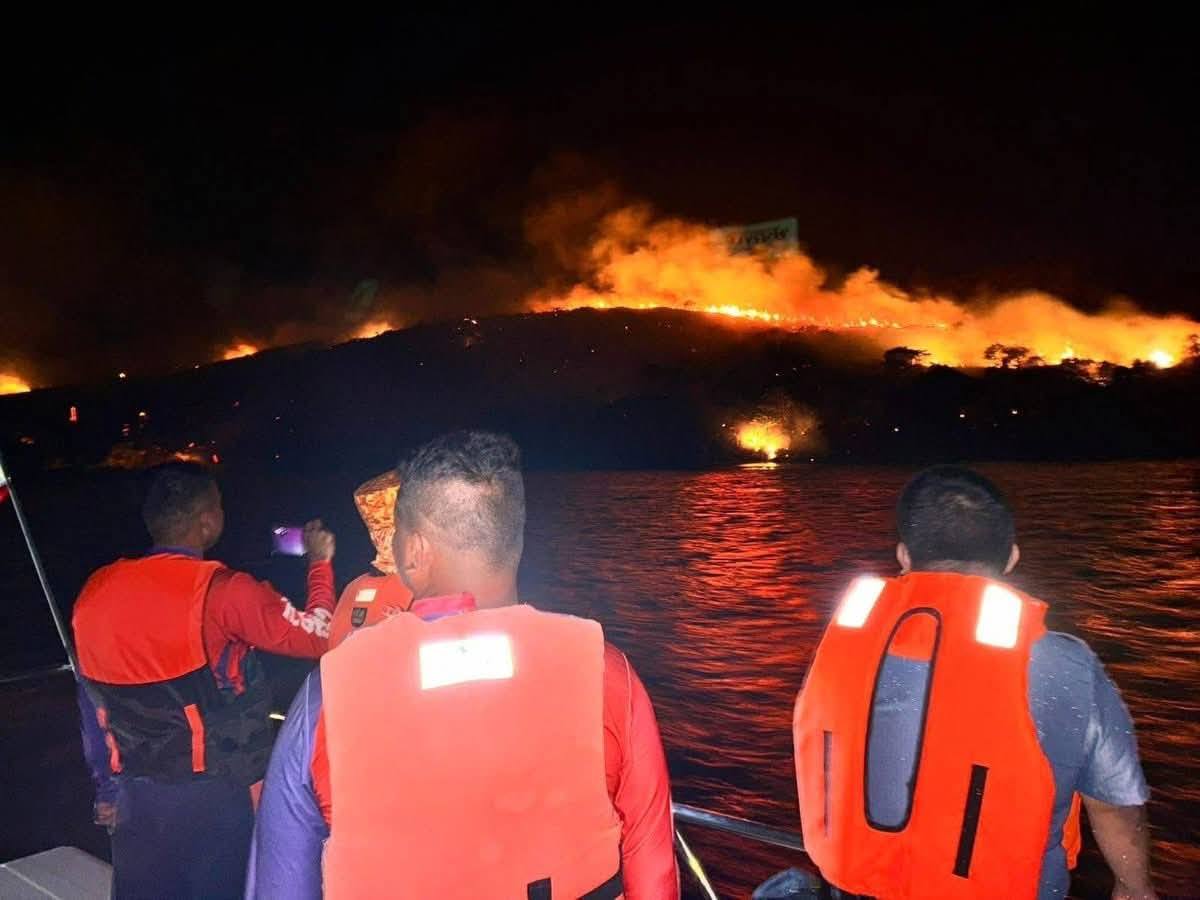
BATANGAS, Philippines — Authorities are closely monitoring a grass fire that broke out on Taal Volcano Island, prompting heightened security and safety measures amid the island’s ongoing volcanic risks. The Philippine Coast Guard (PCG) Southern Tagalog, working alongside the Bureau of Fire Protection (BFP), concerned local government units, and the Philippine Institute of Volcanology and Seismology (PHIVOLCS), has intensified surveillance efforts in the area.
According to the Coast Guard, maritime patrol assets have been deployed to enforce strict restrictions around the island. These patrols aim to ensure that no unauthorized individuals or vessels attempt to approach Taal Volcano Island, where volatile conditions could pose serious danger not only from the grass fire but also from the ever-present threat of volcanic activity. Authorities emphasized that access restrictions remain crucial given Taal’s history of sudden eruptions and hazardous gas emissions.
Notably, officials confirmed that no active firefighting operations are currently being conducted on the island. This decision, while alarming to some, is rooted in safety considerations. Fire suppression efforts in an active volcanic zone carry significant risks, including exposure to toxic gases, unstable terrain, and the possibility of sudden volcanic unrest. Authorities stressed that responder safety remains a top priority.
The incident highlights a broader issue in disaster management: how overlapping natural hazards—such as fires occurring in geologically active zones—can complicate response strategies. While grass fires are often manageable, their presence on a volcano like Taal transforms a seemingly routine emergency into a high-risk situation requiring restraint rather than immediate intervention.
As climate conditions grow more extreme and environmental risks intersect, incidents like this serve as reminders that disaster preparedness must be adaptive, science-based, and cautious. The balance between action and restraint can mean the difference between protection and tragedy. In situations where nature presents multiple threats at once, how should authorities—and the public—redefine what “effective response” truly means? (Larawan mula sa: Coast Guard Southern Tagalog / via Dennis Datu, ABS-CBN News / Facebook)